{% web_view 'View in Browser' %} | Forwarded this email? Subscribe here.
AEA Newsletter
May 2025
5-minute read
Hi Friends, 
 
Happy May Day!
 
May 1, lying halfway between the spring equinox and summer solstice, traditionally marks the beginning of summer. 

We’re celebrating not with maypoles, but with root exudates, new Grower's Guides, and an 89% increase in trunk cross-sectional area. 
 
May your May Day be full of flowers, sunshine, and abundant plant-available manganese!

1 big thing: 🌳 Growing Trees Faster
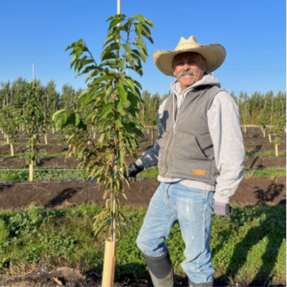
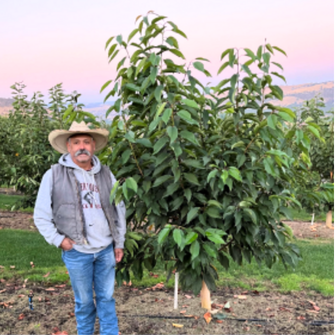
Two cherry trees: same age, same variety, same rootstock, same orchard.
Guess which one had AEA? 
In much of the country, it’s planting season—that time of year when we do a whole lot of work and spend a whole lot of money, then wait patiently for harvest time.  
 
Some growers have to wait a lot longer for a crop than others. A fruit tree planted today won’t bear fruit for years, and may not reach its full productive capacity for 10 years or more. 
 
Finding a way to speed up a tree’s growth and bring it into production sooner, while keeping its nutritional integrity high, would yield serious benefits. 
 
That puzzle was just what cherry maestro (and AEA ambassador) Mike Omeg of Orchard View Farms wanted to solve. After using AEA products on his orchard for years, and seeing serious benefits, Mike designed a trial specifically to see what an AEA program could do for the growth rate of young trees. 

Here’s what he did:
  • Mike selected 5-12 trees from each of 11 varieties in the treatment block.
  • He chose a similar number of trees of the same varieties in other blocks of the orchard to use as a control. 
  • In total, the trial and control each comprised 90 trees. 
  • All the trees were the same age—the trial took place a year after they had been planted out. 
Mike gave the trees in the trial block 2 AEA applications per week: 1 foliar and 1 fertigation. 
  • The foliar treatments were calibrated based on sap analysis and field observations.
  • The fertigation was Mike’s secret sauce for maximizing soil biology. 
  • The control block did not receive any AEA applications. 
  • Treatment lasted 5 months: early May through early October. 
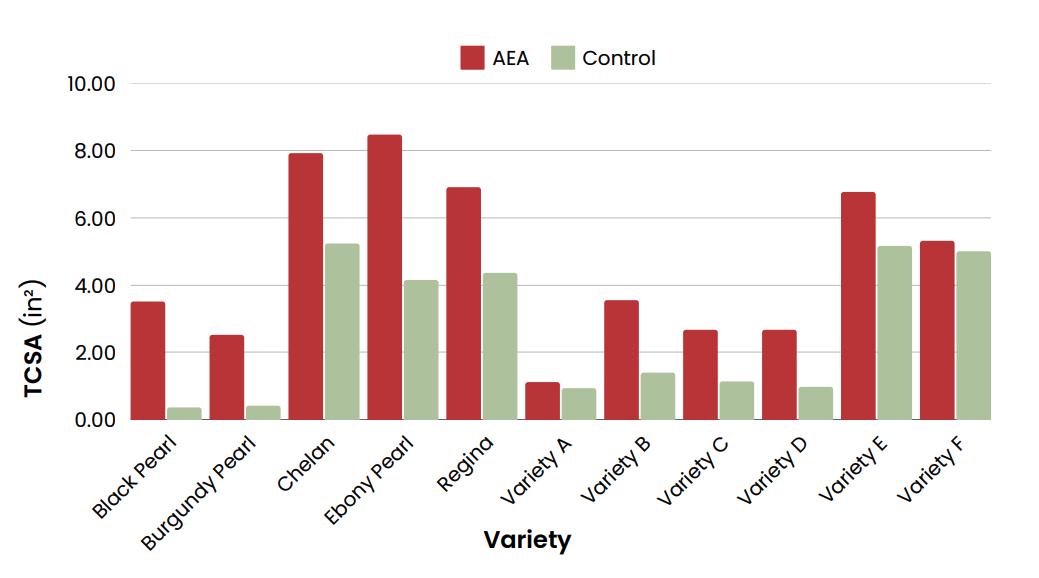
At the end of the trial, Mike measured the trees’ trunk cross-sectional area (TCSA). 
 
The AEA-treated trees averaged a whopping 89% higher TCSA. 
  • In more than half of the varieties, the TCSA of the AEA-treated trees was over twice that of the control trees. 
“If you drive by this orchard, you think it’s a few years older than it is,” Mike says. 
Read the full case study
P.S. If you didn't hear Mike Omeg on the Regenerative Agriculture Podcast last week, check it out! It was a great interview. 
 

2. 🥦 New Fruit and Vegetable Grower's Guide
So . . . you want to learn how to grow fruit as awesome as Mike Omeg? 
 
Our brand new Fruit and Vegetable Grower's Guide is the best place to start. 
  • We've made easy-to-use formulas with our most essential products.
  • The formulas work at any scale—from small, diversified market gardens to large-scale field crops. 
  • It's for both organic and conventional growers. 
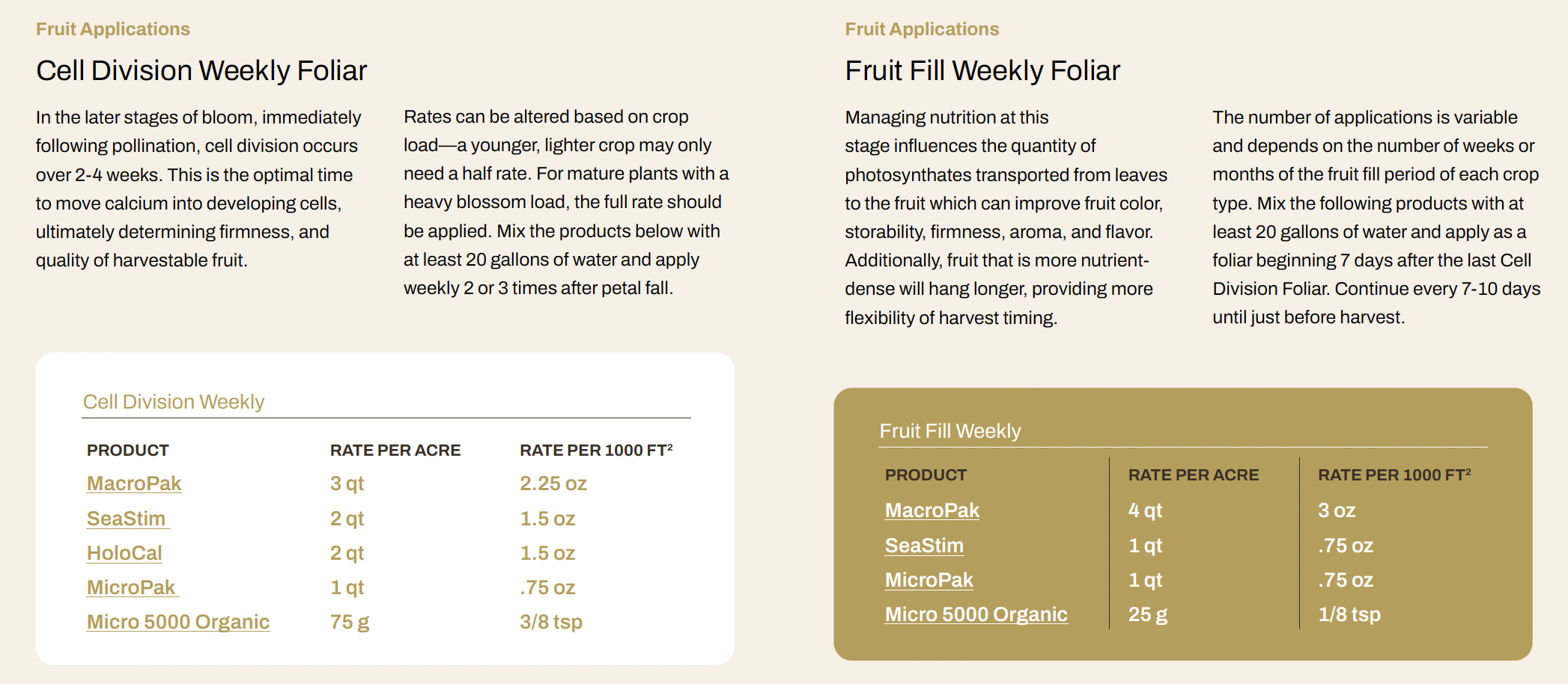
The dead-simple formulas in this booklet will help fruit and veg growers meet their crop’s nutritional needs at every stage of the year: flowering, fruiting, and vegetative.
  • You'll just need a few essential products used in different ratios throughout the year. 
Growers of any scale will delight in this new, simple way to get started with AEA. 
Download the Fruit and Vegetable Grower's Guide
An excerpt from the guide. 

3. 📖 Best of the Blog
Did you know that May is “Root Exudate Awareness Month?” (Not really. . . it’s actually Zombie Awareness Month, but we like our idea better.)
 
Regardless, we’ll be doing our best to spread awareness of root exudates: one of a regenerative grower’s most powerful allies. 
 
Here are just a few cool features of exudates we outlined in a recent blog post: 
  • 5 times greater carbon stabilization in the soil than above-ground biomass 
  •  Mobilizing micronutrients
  • A key component to creating a disease-suppressive microbiome 
  • Altering rhizosphere pH by up to 2 points higher or lower than the surrounding soil
  • Feeding the microbiome with up to 70% of the carbon a plant photosynthesizes
Whoa! 
Read the post here

4. 📽️ Mastering Manganese

In his latest whiteboard session, John Kempf explains the critical functions of manganese–including how it serves as a “potassium thermostat” for plants, regulating their potassium uptake. 
 
But almost all soils are manganese deficient, and furthermore, soil-applied manganese oxidizes quickly, rendering it unusable to plants. 
 
How can you get adequate levels of manganese in your plants?
  • Spoiler alert: it’s Rebound Manganese 😁

 5. 🙋‍♂️ Name that crop!  
Last month’s mystery crop was a toughie—only 4 people were able to name it. Congrats to Sarah from Texas who got it correct: 
 
 Yerba Maté  
 
(Ilex paraguariensis) 
 
Sarah was introduced to maté—both the beverage and the plant—by an Argentine friend, who, she says, “is an addict to maté, as most are.” 
 
(Editor's note: Yerba maté holds a special place in the heart—and nervous system—of our newsletter writer, who is currently operating under its influence.)

Let’s linger in South America for another month. 
 
Can you name this crop? 
 
One lucky winner who guesses correctly will win an AEA hat! 
 
Submit your guess for a chance to win!

6.  🇲🇽 Meet us in Mexico
John Kempf will be speaking at the Foro Nacional de Agricultura Orgánica in San Miguel de Allende, Mexico (about 300 km northwest of Mexico City) on May 22.
 
John will be giving two presentations on the potential of regenerative agriculture in organic vegetables. 
Register for Mexico

 
For those looking to stay stateside, you can see AEA agronomist Shelley Katz CCA at "Rhode to Regenerative" at the University of Rhode Island on May 19th.
 
Shelley will be sharing her experience with agroforestry and silvopasture.
Register for Rhode Island

7. 📚 Reading List 

Interesting links, stories, and articles we’ve been reading this month. 
 
Farmers’ Favorite Weedkiller Nears Its End, Bayer Warns | Wall Street Journal [paywall] 
As lawsuits over RoundUp pile up, Bayer finds its profits burned up. 
 
Rethinking No-Till | Friends of the Earth
A scathing report warns of greenwashing in regenerative ag, finding that "most conventional no-till falls far short of the goals of regenerative agriculture."
 
Inside Fashion’s Regenerative Cotton, And Brands Paying Green Premiums | Forbes
 
Protecting the environment—and growing business—through regenerative agriculture | USA Today
 
Regenerative Agriculture and What Businesses Can Learn From It | Rolling Stone
 
The Ultimate Organic Pesticide: JADAM Microbial Pesticide (JMP) | JADAM 
Anyone tried this? We'd be curious to see some data on it. 

8. 📸 Photo of the month

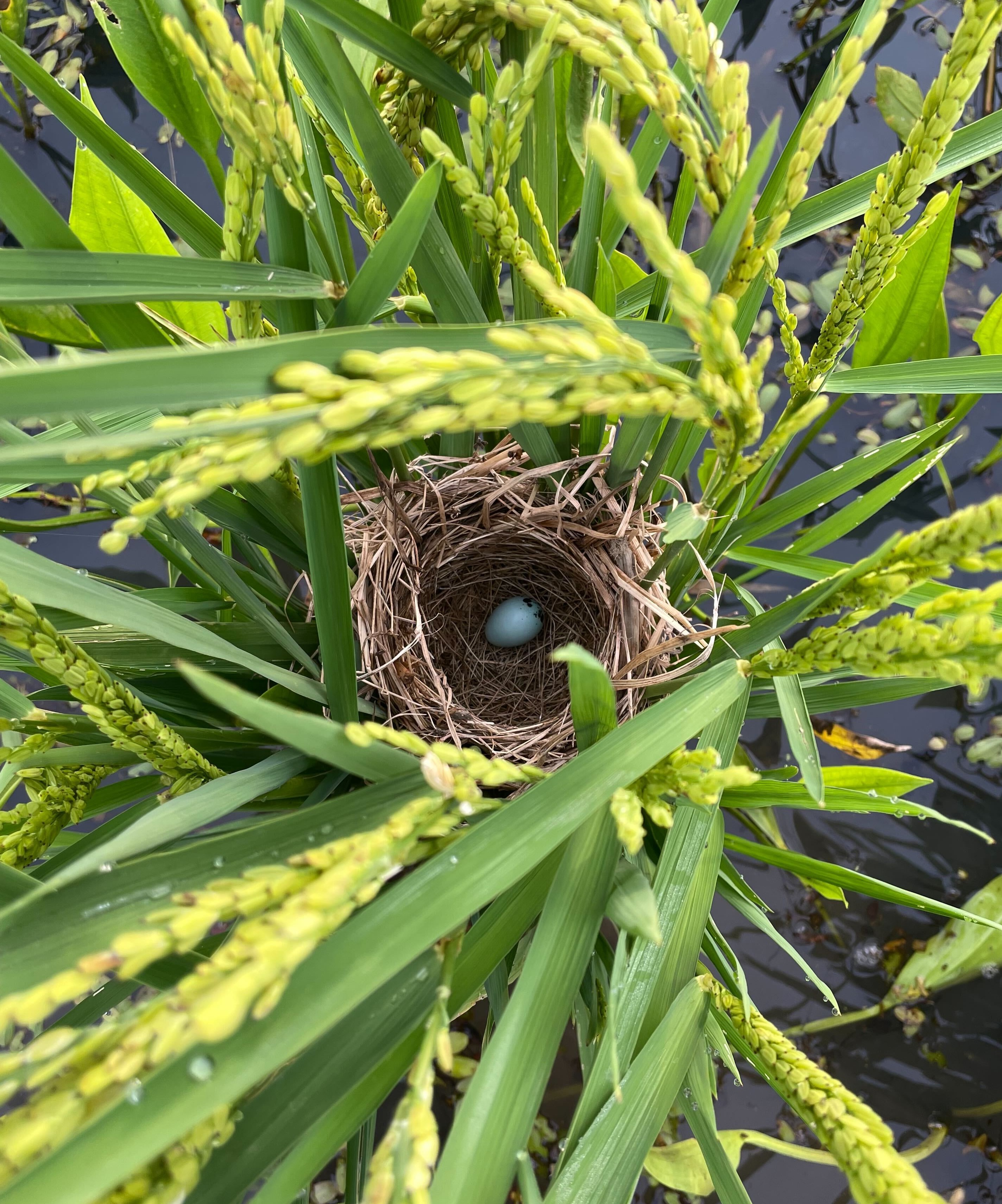
AEA Field Technician Bruno Sagrera stumbled upon this lovely robin’s nest while scouting the rice paddies at Coastal Prairie Farm and Nursery in southwest Louisiana. 
 
Owner Justin Fuselier is a trailblazing holistic rancher, regenerative rice farmer, and regenerative crawfish aquaculturalist.
 
Here are some awesome things Justin's doing:
  • Restoring his pastures to native coastal prairie, the historic ecosystem of the region
  • Pioneering a low input winter rice system (like winter wheat)
  • Rotational grazing cattle on native prairie pastures and cover cropped rice and crawfish fields
  • Controlled prairie burns
The birds love his practices, and so do we. Rock on, Justin!

 
Received from a friend? Subscribe here for more. 

You've signed up to receive our newsletter. 
Want fewer emails? {% manage_preferences 'Manage Email Preferences' %}
If you no longer want any emails, {% unsubscribe 'click here' %}
Advancing Eco Agriculture, Inc.
{{ organization.full_address }}
YouTube
LinkedIn
Instagram
Facebook