{% web_view 'View in Browser' %} | Forwarded this email? Subscribe here.
June 2025
5-minute read
Hi Friends,
It's June, believe it or not!
The days are getting longer, the soil’s heating up, and biology is buzzing — above and below ground. Whether you're scouting fields, sipping on something cold, or watching ladybugs do their thing, June is the time to shine.
This month, we’re talking fish fertilizers, beneficial insects, and Brix readings that make agronomists do a double take.
1 big thing:
In much of the country, it’s planting season—that time of year when we do a whole lot of work and spend a whole lot of money, then wait patiently for harvest time.
Some growers have to wait a lot longer for a crop than others. A fruit tree planted today won’t bear fruit for years, and may not reach its full productive capacity for 10 years or more.
Finding a way to speed up a tree’s growth and bring it into production sooner, while keeping its nutritional integrity high, would yield serious benefits.
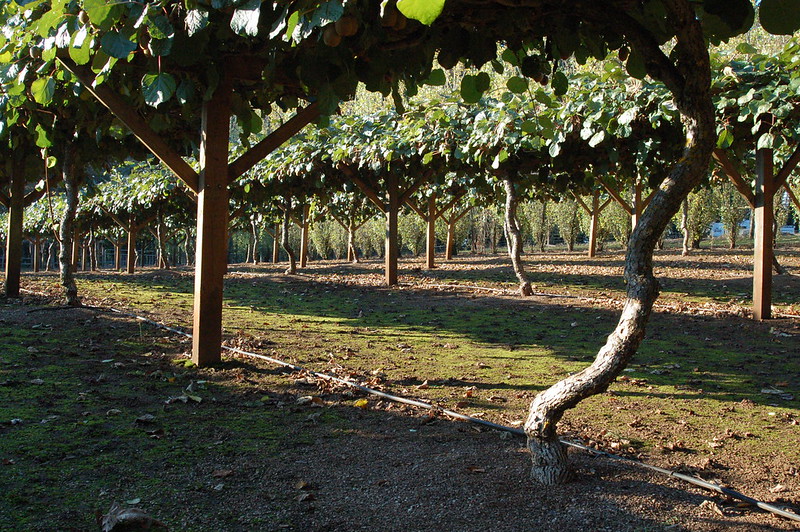
That puzzle was just what cherry maestro (and AEA ambassador) Mike Omeg of Orchard View Farms wanted to solve. After using AEA products on his orchard for years, and seeing serious benefits, Mike designed a trial specifically to see what an AEA program could do for the growth rate of young trees.
Here’s what he did:
Mike selected 5-12 trees from each of 11 varieties in the treatment block.
He chose a similar number of trees of the same varieties in other blocks of the orchard to use as a control.
In total, the trial and control each comprised 90 trees.
All the trees were the same age—the trial took place a year after they had been planted out.
Mike gave the trees in the trial block 2 AEA applications per week: 1 foliar and 1 fertigation.
The foliar treatments were calibrated based on sap analysis and field observations.
The fertigation was Mike’s secret sauce for maximizing soil biology.
The control block did not receive any AEA applications.
Treatment lasted 5 months: early May through early October.
At the end of the trial, Mike measured the trees’ trunk cross-sectional area (TCSA).
The AEA-treated trees averaged a whopping 89% higher TCSA.
In more than half of the varieties, the TCSA of the AEA-treated trees was over twice that of the control trees.
“If you drive by this orchard, you think it’s a few years older than it is,” Mike says.
Almost every grower has a problem field: one area that just doesn’t perform like the others.
Sometimes the cause is known: maybe it’s too wet or too dry, maybe it’s on poor soil or an exposed location.
Other times, it’s a total mystery: is there herbicide residue from a bygone application? Is something off-balance in the soil? Or is it just the wrong conditions for that particular crop?
A common approach to handling a problem block of perennial fruit is just to rip it out and start over with something new. But that can get expensive.
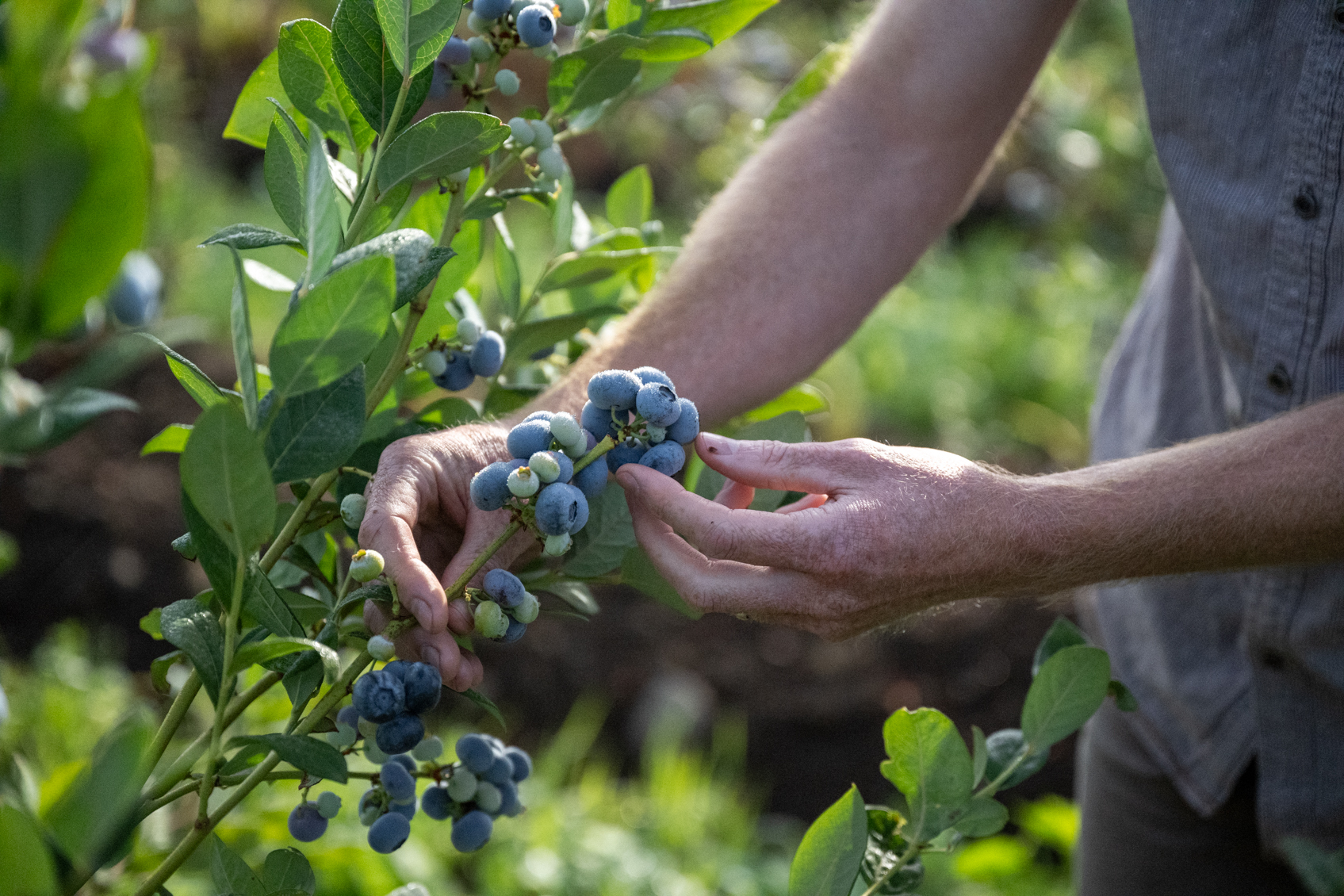
We were approached by a blueberry grower in Washington who was thinking about ripping out a problem block: 20 acres of blueberries that had been getting steadily weaker, to the point where it was only yielding about one ton of fruit per acre.
They asked us if we could design a program to save the block that would price out cheaper than the bulldozer
We were quite sure we could.
We suspected that something was wrong with the soil due its prior management history, which was preventing the plant from uptaking nutrients properly.
Without knowing exactly what was wrong, we thought strong biology could fix whatever it was that ailed that soil.
Our solution:
Much higher-than-normal rates of biological inoculants, with as much species diversity as possible throughout the season
Soil primers in spring and fall, to create a hospitable environment for biology
Fertigation and foliar nutrition, informed by sap analysis, to strengthen the bushes
The results:
The blueberry plants established a better relationship with the soil biology
That allowed them to more effectively uptake nutrients and produce a larger crop.
5x increase in yield that year
Crops can suffer from the lingering effects of past management. Although we can rarely know exactly what past farmers have done, soil biology has the remarkable ability to restore soil to a state of balance: mitigating soil toxins along with nutrient excesses and deficiencies. Biology can save a block, and save money too.
We’ve partnered with Tidal Grow® to bring you their fantastic ocean-derived phosphorus supplement: SeaPhos.
SeaPhos is a cold-processed seafood hydrolosate with 7% available phosphate (6% in SeaPhos Organic).
Its phosphorus comes from the calcium phosphate in fish bone, stabilized with phosphoric acid.
This phosphorus is highly bioavailable, with a sustained release.
SeaPhos is cold-processed (just like AEA’s SeaShield and SeaGuard), so it retains the beneficial omega-3 fats from the fish.
Fats offer a great food source to mycorrhizal fungi
They also help stabilize phosphorus in the soil.
SeaPhos is currently available in 265-gallon totes, as well as in custom blends from our Kansas, California, and Pacific Northwest warehouses.
Shop now
4. 📖 Best of the Blog
This month on the blog, we dove into the murky but magical world of fish fertilizers — a centuries-old input that still holds value in modern regenerative systems.
Here are a few fascinating tidbits about fish fertilizers from our latest post:
Packed with amino acids that stimulate microbial activity and root development
Offers a mild, slow-release source of nitrogen (gentle but effective)
Supports microbial resilience and helps plants bounce back from stress
Can be a secret weapon for early vegetative growth in foliar programs
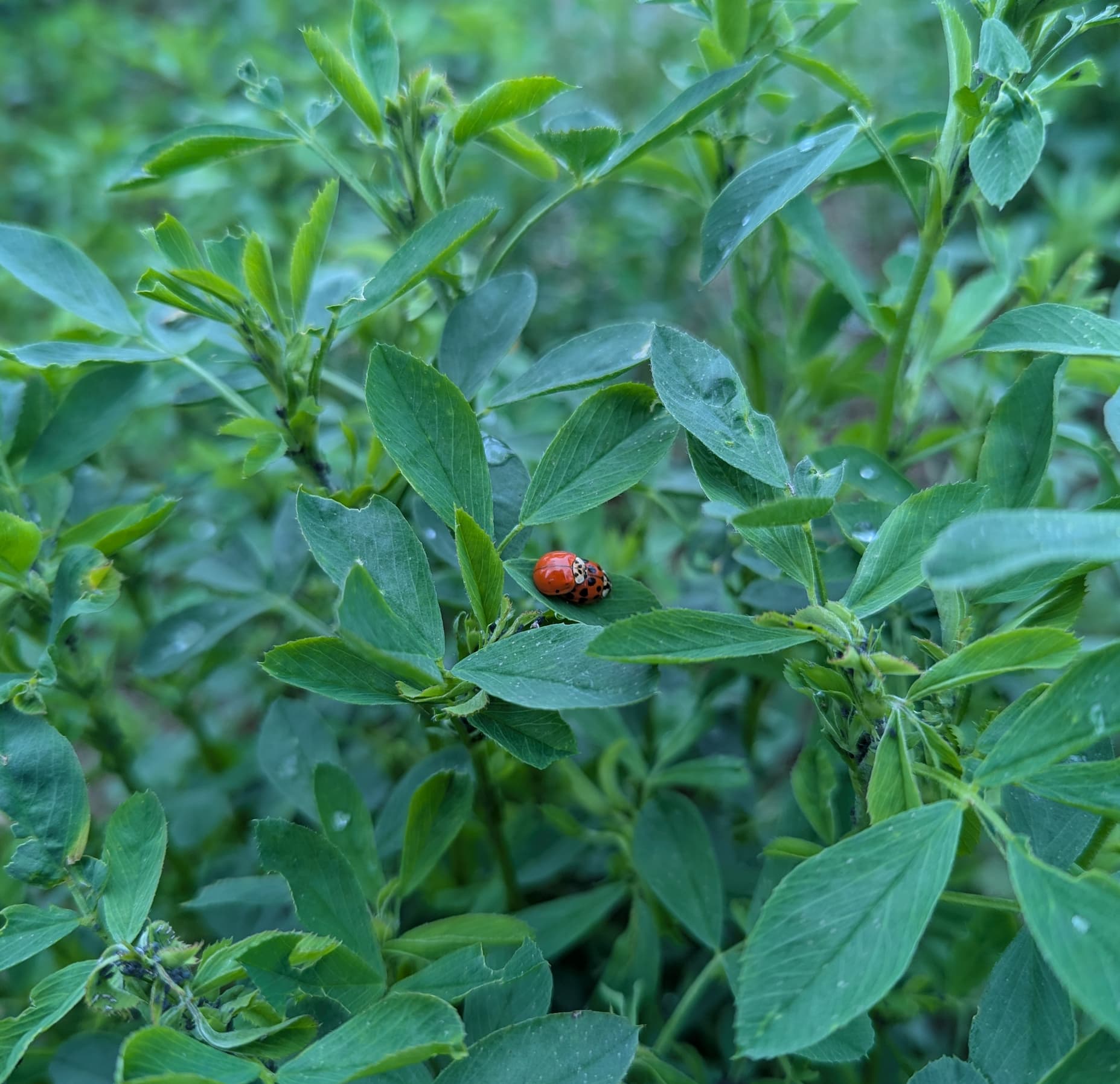
This snapshot from a Kansas alfalfa field might look simple — but it tells a powerful story.
While neighboring farms sprayed pesticides for alfalfa weevil (with little success), this regenerative field didn’t need a single application.
The grower recently called to share his excitement: while others struggled with alfalfa weevil outbreaks, his field stood strong without a single spray. Even better? The Brix tested at an impressive 15 — a sign of high-energy, nutrient-dense forage.