{% web_view 'View in Browser' %} | Forwarded this email? Subscribe here.
AEA's monthly newsletter
August 2025
6-minute read
Hi Friends, 
 
We’ve got a lot to share this month: 
  • Stats from the launch of FieldLark, our AI agronomist
  • The release of our first-ever disease control product 
  • Info on our contract consulting services
  • A workshop with John Kempf in Washington State
Our goal—always—is to provide the resources you need to succeed in regenerative agriculture. 
 
First, we’ll share some major success that we’ve seen with regenerative practices in wine grapes.

1 big thing: 🥂 366% ROI at Wilson Creek Winery
Some critics of regenerative agriculture are skeptical that one solution could offer cures to as diverse a set of problems as farm economics, chronic disease, climate, pollution, and biodiversity collapse. 
 
Those critics clearly don’t understand the power of the soil. 
 
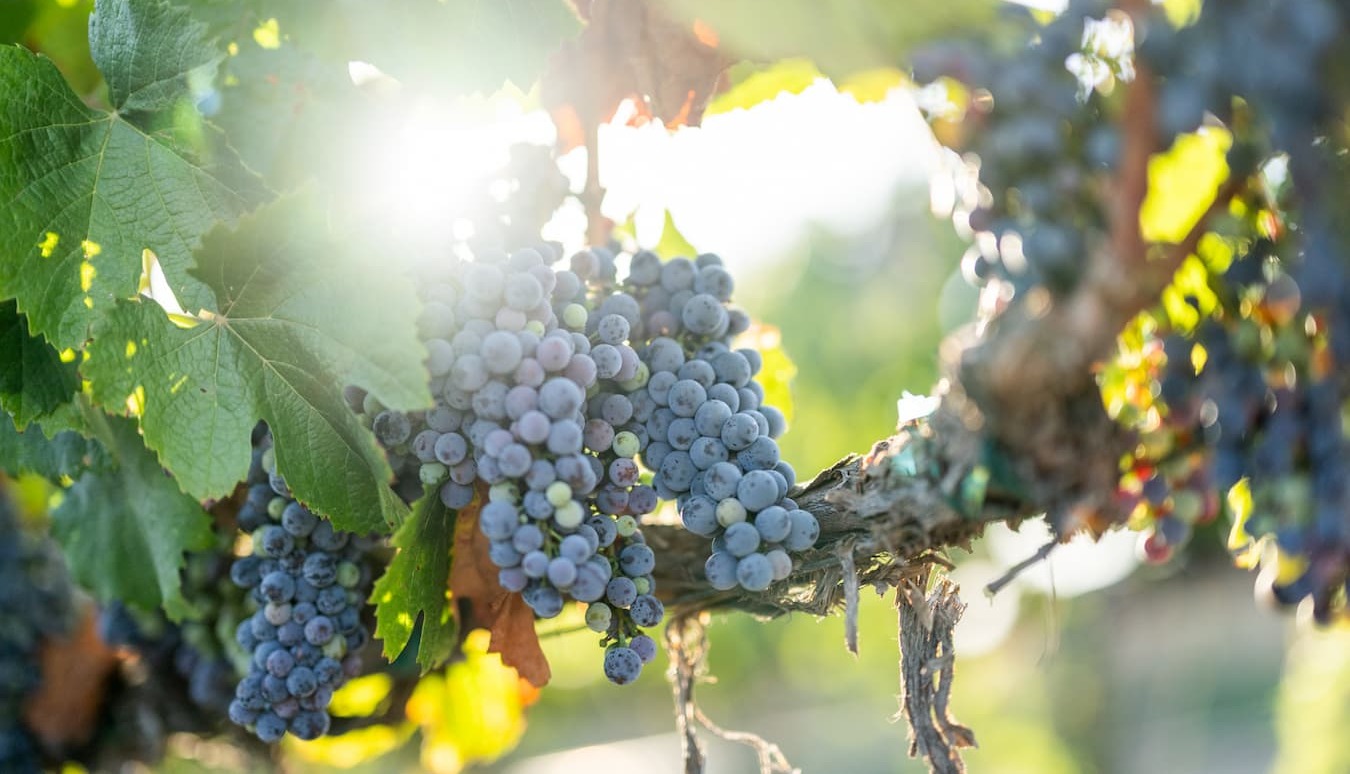
We recently published a case study chronicling the numerous and diverse benefits we’ve observed while working with Wilson Creek Winery in Temecula, California. 
 
We’ve been fortunate to work with Greg Pennyroyal, vineyard manager at Wilson Creek, for the past 7 years. Along with his expertise in viticulture, Greg has a renegade’s daring and a scientist’s precision, making him an ideal partner for field trials. 
 
Our work at Wilson Creek made for a fruitful case study, for a couple reasons. 
  • Soil health is a long-term investment. Working in one spot for 7 years lets us see the results of that investment.  
  • Greg trialed a range of program intensities, showing what’s possible on different budgets.
    •  He went “all-out” on one block, throwing everything at it with no regard for cost. 
    • Other blocks had more moderate programs. 
    • Still others were left as controls. 
Here are just some of the results we’ve seen: 
  • 50% fungicide reduction
  • 40% more organic soil carbon
  • 30% reduction in water use 
  • 257% increase in Haney soil health
  • 5x higher soil respiration
  • 4x faster water infiltration
  • 60% more organic nitrogen
  • 2x organic-to-inorganic nitrogen ratio
  • Diseases like Esca, Red Blotch Virus, and Phomopsis are no longer concerns. 
  • Year-over-year yield stabilization
All with a 366% ROI on the AEA program.
 
As a vertically-integrated winery (controlling everything from vine to bottle), Greg notes that Wilson Creek is particularly well-suited to capitalize from regenerative practices: 
  • Grape quality is reflected in wine quality, and thus bottle price.
  • They can market to consumer demand: while the market for wine overall is shrinking by 8-18%, regenerative wine is growing by 32% 
Read the full case study here

2. 🦅 Pinion: AEA’s first disease control product
Powdery mildew is the only disease that still causes any serious headaches at Wilson Creek Winery. 
 
That made Wilson Creek the perfect place to trial our newest product: Pinion™. 
 
Pinion is AEA’s first ever disease control product. 
  • We’ve been preaching for decades that healthy plants can resist all pests and diseases. 
  • But the journey up the Plant Health Pyramid is long, and diseases need controlling along the way, ideally without compromising the gains in plant health. 
That’s why we made Pinion. 
 
Pinion works through a 2-pronged effect:  
  • Its active ingredients have a pesticidal effect on disease organisms 
  • Our proprietary blend of other ingredients creates a physical barrier on the leaf’s surface to protect it from infection
Unlike both organic and conventional fungicides, Pinion works to enhance the microbiome on the leaf’s surface.
  • It fits perfectly into a regenerative management system, where a thriving microbiome is the goal. 
Pinion is currently available in CA, GA, IL, MA, MN, MO, NY, OH, TX.
  • Registration is ongoing in the other states. 
Shop now

3. 🤖 Ask AI 
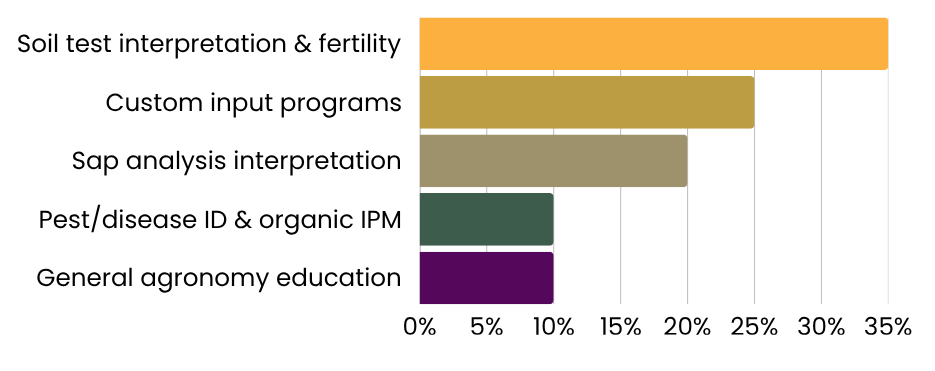
FieldLark AI, our regenerative AI Agronomist, has been out for 10 days, and growers have already asked it almost 20,000 questions. 
 
Here’s a look into the types of questions people are asking:
  1. Soil test interpretation & fertility
FieldLark can process uploaded soil tests and provide recommendations, including:
  • How to interpret soil tests 
  • Which amendments to use: gypsum, lime, rock phosphate, humates, etc.
  • Building organic matter and improving structure
Example question: “Here's my soil test: pH 5.3, CEC 9.2, calcium 42%, magnesium 6%, potassium 2.3%, sodium 0.7%. What should I do to raise calcium without overdoing pH?

  1. Custom input programs (foliar, biologicals)
FieldLark can either recommend AEA products, or avoid AEA products, depending on whether you have them available. You just have to ask!
 
Types of questions asked here include: 
  • How to safely combine inputs
  • Best practices for mixing pH-sensitive ingredients
  • How to time foliar sprays for maximum uptake
Example question: “Can I mix fish hydrolysate, humic acid, amino acids, EM, and kelp in one foliar spray? Should I adjust the pH before spraying?”

  1. Sap analysis interpretation & foliar recs
You can upload sap results to FieldLark, and it will interpret them and provide foliar recommendations based on your crop and context. 
  • Interpreting high/low K, Ca, Mg, NO₃, EC, pH, sugar
  • How to build a foliar program from sap results
  • Addressing leaf symptoms with targeted sprays
Example question: “My sap report shows high potassium and low calcium in the upper leaves. What does that mean for fruit set, and what should I foliar spray this week?”

  1. Pest & disease ID & organic IPM
FieldLark can process photo uploads of diseases based on visual symptoms. You can also describe what you’re seeing in text.
  • Diagnosing common pest and disease symptoms
  • How to boost immunity with nutrition (e.g. Ca, B, Si)
  • Natural sprays and homemade solutions (garlic, neem, etc.)
Example question: “These brown spots with yellow halos are spreading fast on my tomato leaves. Is this bacterial spot or septoria? What can I spray organically?”

  1. General agronomy education & how-to
We’ve taken to calling FieldLark “John Kempf in your pocket,” because it has all the educational capabilities of our founder. Dive deep on subjects like: 
  • How do Ca:Mg ratios affect pest susceptibility?
  • Understanding CEC and base saturation
  • Simple compost tea and EM recipes
Example question: “What is soil redox, and how does it affect nutrient uptake and disease pressure?”


Not all questions fit neatly into these categories, of course. 
  • Some questions relate to the odiferous qualities of regenerative agriculture.
Example question: “I put fermented aloe, fish, and sugar in the sprayer. Why does it smell so bad now?”
 
    😆
Try out FieldLark for free

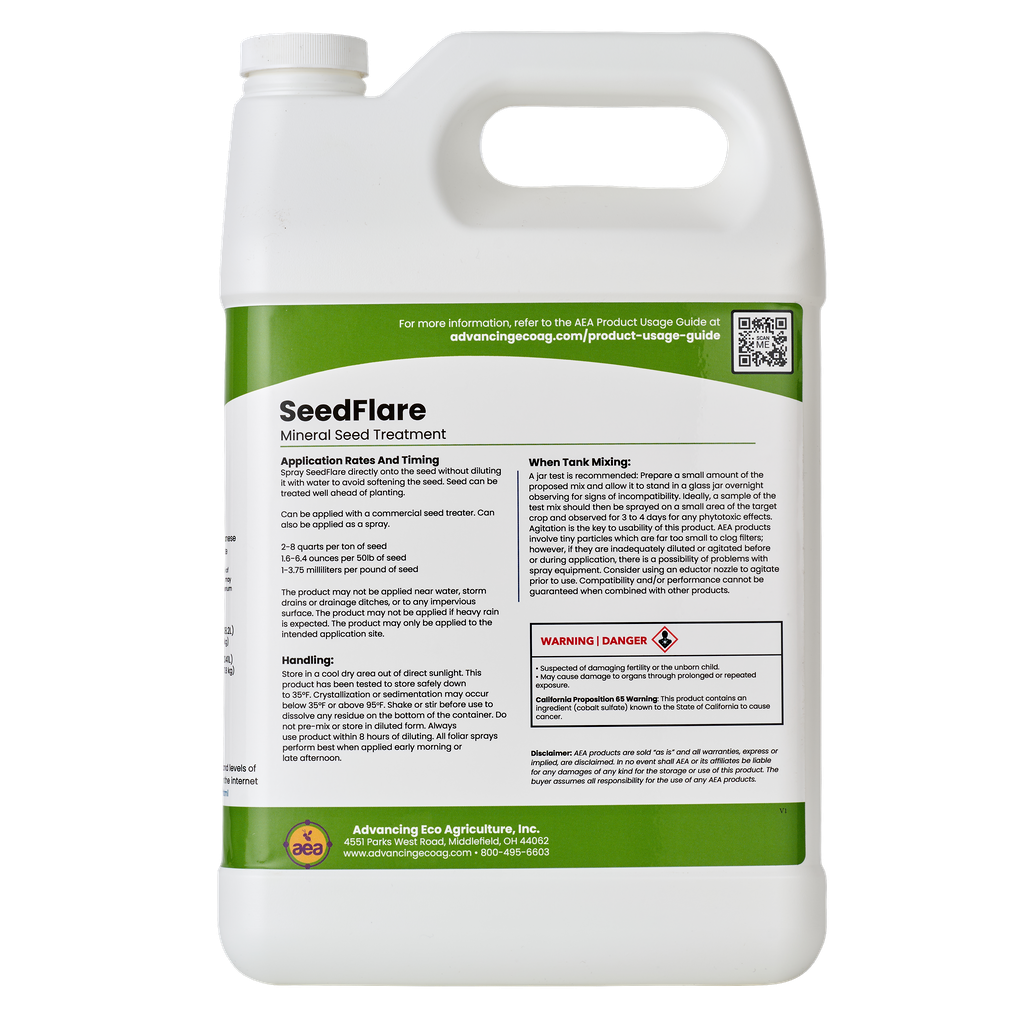
4.  ☃️ Winter is Coming: Bundle up your seeds with 10% off.   

If you’re getting ready to plant cover crops or winter wheat, make sure your seeds get off to their best possible start.
 
Get 10% off BioCoat Gold™ and SeedFlare™ when you purchase them together, now through September 15th.
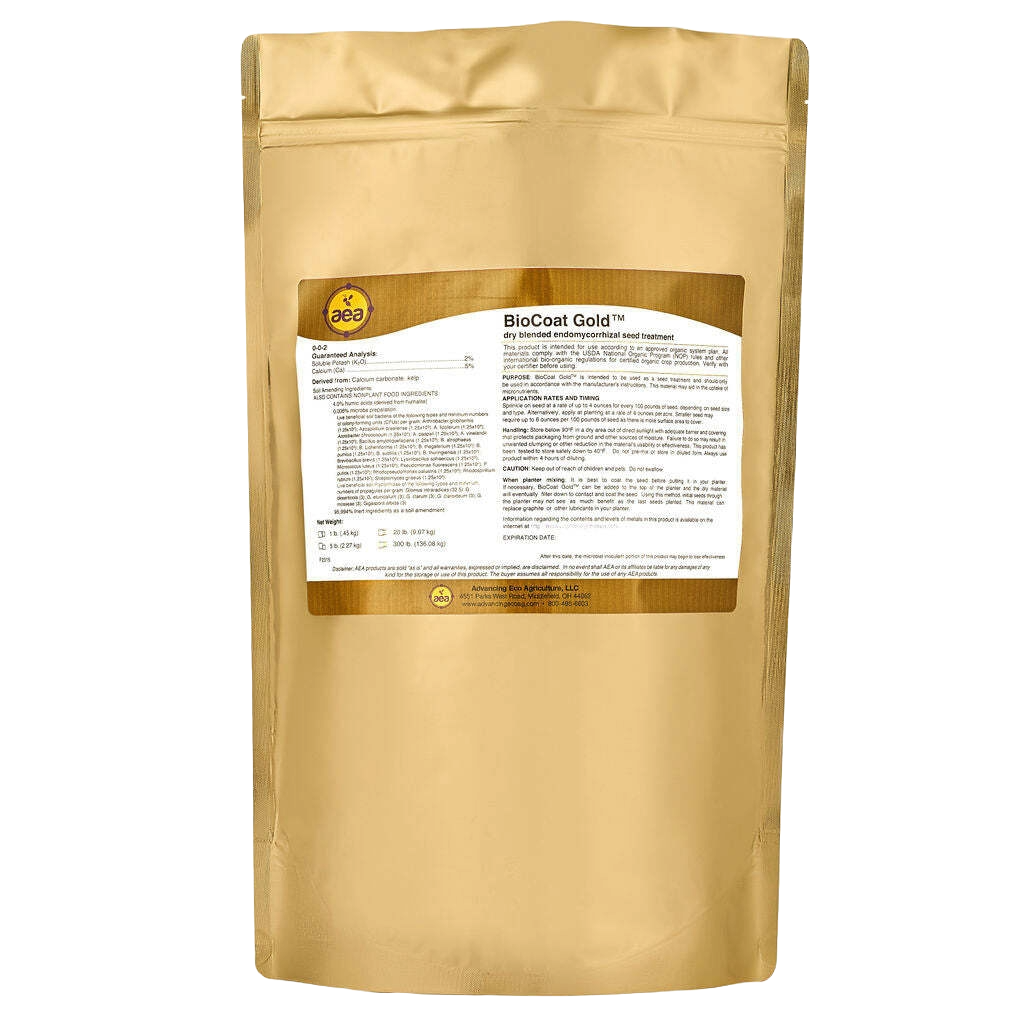
  • BioCoat Gold provides seeds with biology and biological support
  • SeedFlare provides 7 essential minerals for seedlings. 
  • They’re applied in small quantities, and are incredibly cost-effective
When applied together, BioCoat gold and SeedFlare result in: 
  • Rapid germination 
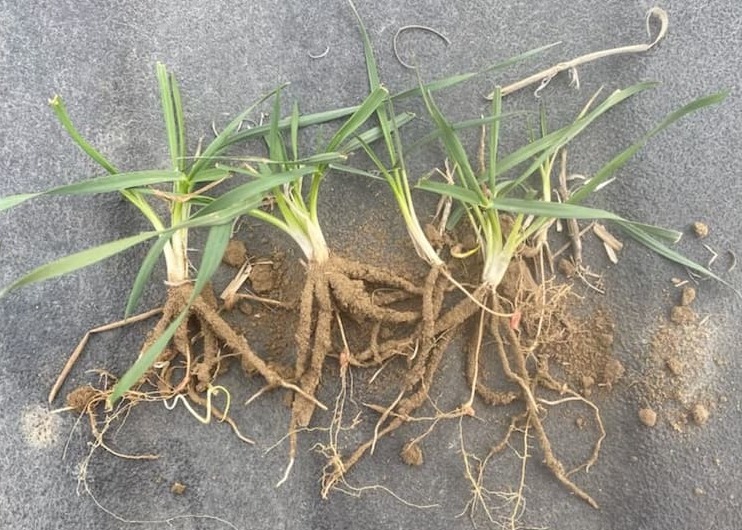
  • Vigorous seedling and root growth
  • Overwintering success
  • Increased grain size
Image of BioCoat Gold™
BioCoat Gold™
Shop now
Image of SeedFlare™
SeedFlare™
Shop now

 5. 📸 Photo of the Month
 
These leaves from an Illinois grower’s corn trial were a hit on social media. 
  • The AEA-treated leaves are the big ones on the left
  • The grower’s conventional program grew the skinny leaves on the right. 
Incredibly, the AEA program had about 40 units LESS nitrogen, thanks to our Nitrogen efficiency program.
 
Increased leaf surface area = increased photosynthetic capacity = increased sugars. 
 
More sugars make for more fruit / grain size, more root exudates, healthier soil, disease resistance . . . and the list goes on! 
 
Learn more about nitrogen efficiency

6. 🤝 Groundwork contract consulting

Ever wish you could access AEA’s expertise​ without buying AEA products? 
 
Did you know you can? 
  • We offer consulting services through our Groundwork contract consulting program—no product purchase necessary. 
We’re starting to set up contracts for 2026. 
  • Act now so you don’t miss out! 
  • We have limited consultancy hours available. 
We’re also taking on limited-run contracts for the rest of 2025. 
CTA: Reach out to our team to learn more. 
 
Learn more

7. 🗓️ Upcoming events in Washington and Michigan

Getting the Most From Your Input Dollars; Regenerative strategies to reduce input costs while increasing yield and quality
with AEA's John Kempf
 
When: September 17, 2025; 8am-3pm
Where: J&B Family Farms. 1098 W Service Rd 26, Othello, WA 99344
Cost: $125 per farm couple
 
With today’s market pressures, every grower is tightening their belt. But fewer inputs don’t have to mean lower yields.
 
Join John Kempf, founder of Advancing Eco Agriculture, as he explains simple and effective regenerative principles like nitrogen use efficiency, that allow growers to reduce costly fertilizer, fungicide, and insecticide inputs—while maintaining or increasing yield and improving quality.
Register

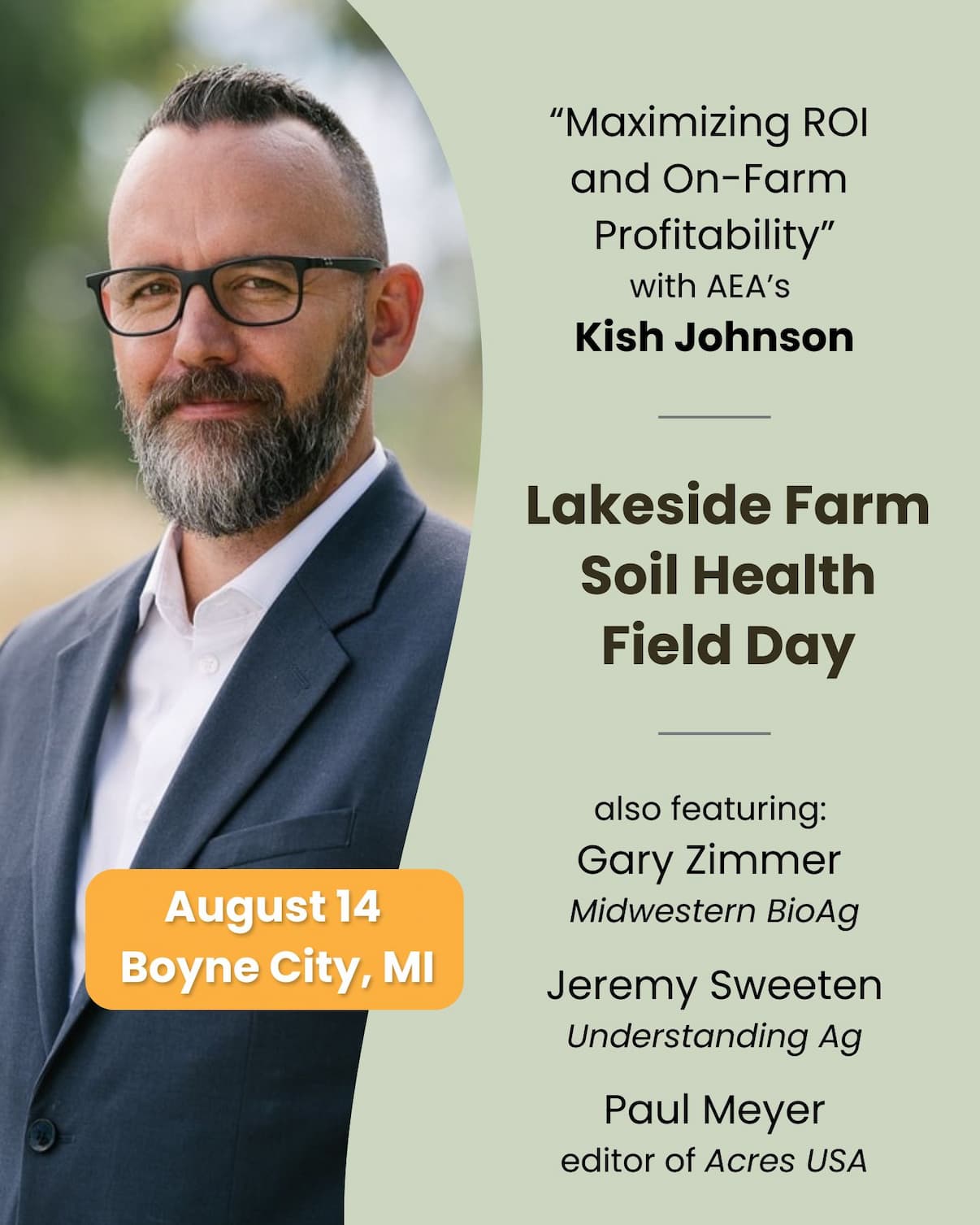
Maximizing ROI and On-Farm Profitability
with AEA's Kish Johnson
 
When: August 14, 2025; 8:30am-3pm
Where: Lakeside Farm. 06255 Zenith Heights Road, Boyne City, MI 49712
 
Join us at the Lakeside Farm Soil Health Field Day alongside Gary Zimmer, Founder of Midwestern BioAg, and Jeremy Sweeten of Understanding Ag.
 
RSVP:
231-548-3200 or 231-268-9404
[email protected]

8. 📚 Reading List 

Food giants graded a “D” on sustainable farming practices | The New Lede
"Major food corporations are failing to effectively support [regenerative] farming practices . . . according to an assessment of 20 companies by a corporate watchdog group."
 
‘This feels like time travel’: has the ‘regen’ farming revolution begun? | Prospect Magazine (U.K.)  
A profile of DJ-turned regenerative farmer Andy Cato, of WildFarmed UK.

[VIDEO] We're changing EVERYTHING this year... | YouTube
Briana Bosch has been growing flowers regeneratively for years, amassing a major following online. This year, she's convinced her dad to try regenerative at scale on the home farm, and AEA has been there to help. Follow her journey in this video. 

9. 🇳🇱 Word of the day: Flächenrotte

Flächenrotte is a technique for terminating cover crops, which translates roughly to “surface decomposition" or “surface fermentation.” 
  • It employs biological principles to maximize the response of soil biology to shallow tillage of cover crops. 
  • It can be done with one pass of the tractor.
Erwin Westers described the results he’s gotten from Flächenrotte to John Kempf on the podcast this month, including: 
  • Soil crumb structure developing to a depth of 10 inches (20-25 cm)
  • A steep increase in organic matter, without compost additions.
Flächenrotte offers an interesting challenge to the dogma of strict no-till. 
  • As Erwin said, “it’s not the plow, it’s the how.” 
Here are the basics of the technique, as Erwin describes it: 
  • Mulch the cover crop in front of the tractor
  • Spray a microbial inoculant on the plants before they’re mulched
  • Run a fast-turning rotavator behind the tractor to a depth of just 1-2” (3-5 cm) 
  • Match rotavating speed with drive speed to avoid creating a smear layer. 
  • Do not roll, or roll only lightly, to keep good gas exchange
The process takes 2-3 weeks, depending on temperature and moisture 
  • It’s ready when it makes a nice sweet smell. 
  • Then it’s safe to sow seed. 
“It’s so nice what you can do with tillage in combination with . . . a biological process,” says Erwin.
Listen to the full episode
Flächenrotte at 30:00


Received from a friend? Subscribe here for more. 

You've signed up to receive our newsletter. 
Want fewer emails? {% manage_preferences 'Manage Email Preferences' %}
If you no longer want any emails, {% unsubscribe 'unsubscribe' %}
Advancing Eco Agriculture, Inc.
{{ organization.full_address }}
YouTube
LinkedIn
Instagram
Facebook