

Shop Our Market Garden Line
Shop all
$119.95
Market Garden Bundle – Market Garden Line
$49.99
BioCoat Gold™ – Market Garden Line
$17.99
Revenant Charge™ – Market Garden Line
$26.99
MacroPak™ – Market Garden Line
$24.99
MicroPak™ – Market Garden Line
$19.99
Pinion for Home and Garden

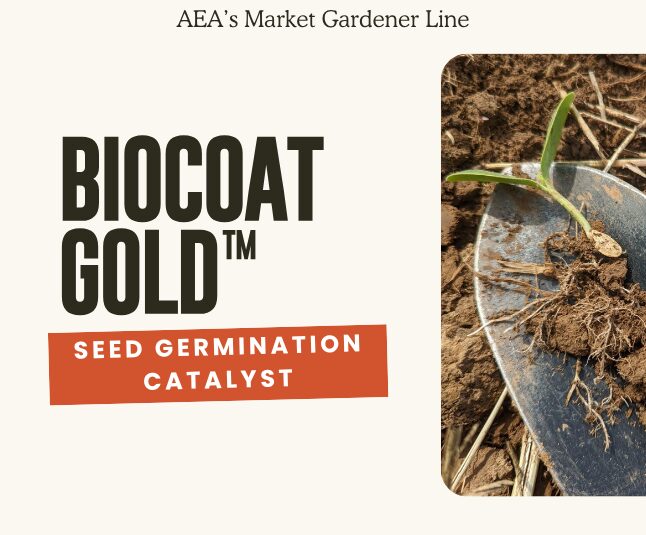

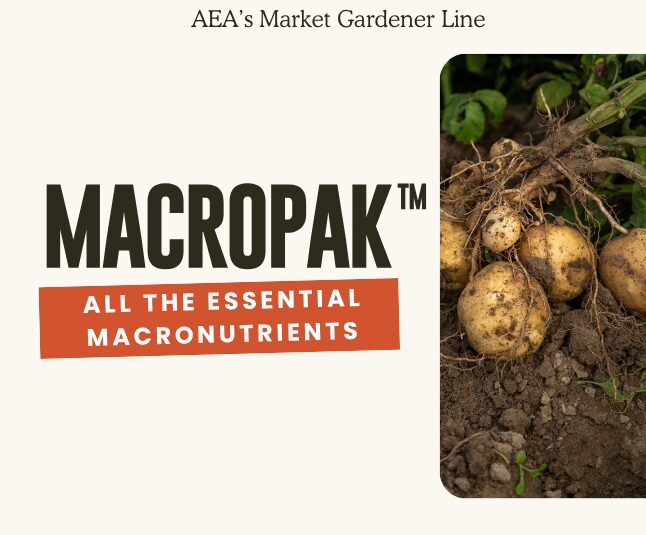


Products for Market Gardeners
Download our Market Gardener Grower’s Guide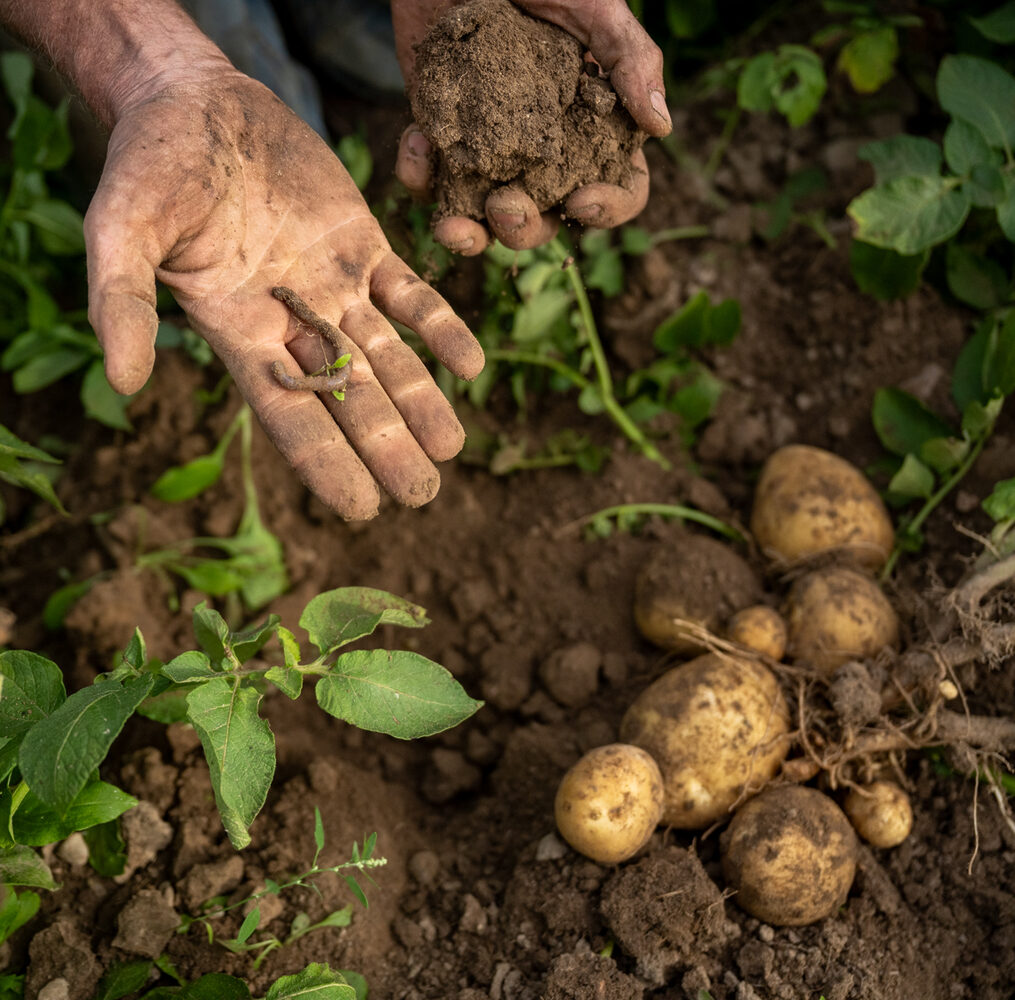
Our management system is designed to maintain proper nutrient balance, which fosters healthier plants and reduces the need for pesticides by building plant immunity. It also creates healthier soils which can release the soil’s mineral reserves, and reduce the need for inputs over the long run.

We help market gardeners enhance the quality and marketability of their produce.
Market gardeners depend on superior flavor and color of their produce to attract customers. They must also manage pests and diseases on their farm, often while navigating organic standards. Fortunately, AEA’s NOP-compliant products can help growers solve all these problems.

Healthy Plants Make Healthy Soil
When plants have the nutrition they need, they photosynthesize more efficiently and send their excess sugars into the soil, where they feed soil microbes. This is a very efficient way to build soil health.
Application Rates and Timing:
Seed Treatments
Our seed treatments help seed germinate faster and more evenly, and provide the nutrition and biology for seedlings to get off to a great start.
BioCoat Gold™
Use 1 gram per pound of seed. Mix with seed before planting.
Soil Treatments
Revenant Charge is a microbial accelerant that empowers biology to release plant-available nutrients from the soil.

Revenant Charge™
1-2 gallons per acre (3-6oz per 1000 square feet)
Disease Control
Pinion is designed to protect the leaf surface from a wide range of fungal and bacterial pathogens—without disrupting the plant microbiome.

Pinion™
Dilution
Dilute with water. Maximum dilution is a 1% solution. Higher concentrations than that are better. Can be mixed with other products in a foliar spray.
Preventative Rate
Apply 2–3 qt. per acre (1.5-2.25 oz per 1000 sqft) as a foliar, ~30 days after germination in annual crops, or once new plant growth is observed in perennial crops.
Responsive Rate
Following signs of disease development, apply 1 gallon per acre (3 oz per 1000 sqft) as a foliar. Requires 2 applications, 10–12 days apart.
Maintenance Rate
Apply 2–3 qt. per acre (1.5-2.25 oz per 1000 sqft) as a foliar, monthly
Foliar Nutritional Sprays
If using a backpack sprayer, remove the tip filters to keep them from clogging. Dilute at least 10:1 with water.
MacroPak
Start with bi-weekly applications of 2 quarts / acre (1.5 oz [43 mL] / 1000 sqft). Rates can be adjusted based on observed crop response or nutritional needs of the plant’s Critical Point of Influence.
MicroPak
Start with bi-weekly applications of 1 pt / acre (0.5 oz [14 mL] / 1000 sqft). Rates can be adjusted based on observed crop response or nutritional needs of the plant’s Critical Point of Influence.
Fertigation
MacroPak
Start with bi-weekly applications of 2 gallons / acre (6 oz [170 mL] / 1000 sqft). Rates can be adjusted based on observed crop response or nutritional needs of the plant’s Critical Point of Influence.
A Note on Water Quality
Beware of chlorine in municipal water and high bicarbonates in well water. Those issues can affect calcium availability and potentially affect the viability of our products.
Generally speaking, rainwater is the best water to use for foliar sprays. If you are using well water or municipal water, it’s a must to get your water tested to be aware of any potential issues. If you find high levels of chlorine or bicarbonates, here are some ways to correct them:
Bicarbonates
• The lower, the better. Below 60ppm is ideal.
• Concentrations above 120ppm should be filtered by reverse osmosis, or replaced by another water source such as rainwater.
• Lowering the pH to 6.5 neutralizes about half the bicarbonate in the water. Conventional growers can inject sulfuric acid or phosphoric acid to lower pH; organic growers can use sulfur burners.
Chlorine
• HumaCarb™ is a very good chlorine binder. If being used to remediate chlorine only, add HumaCarb at a rate of 0.25% of the solution, or 1 qt per hundred gallons.
• You can let small amounts of chlorinated water sit for 24 hours. Much of the chlorine will evaporate.

Resources
 Article
 Oct 23, 2024
Simple and Successful Market Gardening

Apr 09, 2026