

Heat stress can take a tremendous toll on a crop.
In high heat, photosynthesis slows down dramatically, so plants have to disassemble their proteins to use as a source of energy.
Today, we’ll look at how heat stress harms crops—and how to prevent it.
What happens in heat-stressed plants?
When leaf surface temperatures get above 85°F (30°C),* photosynthesis slows down dramatically, so the plant produces fewer sugars. At the same time, respiration increases, so the plant uses up more sugars. You can see this dynamic in the graph below. Net sugar = photosynthesis (solid green line) minus respiration (gold dashed line).

Temperature response of photosynthesis & respiration for an idealized C3 species. Source: J Exp Bot. 2021 Feb 23;72(8):2822–2844. doi: 10.1093/jxb/erab090
Producing fewer sugars while using more is a losing equation.
To fill their energy needs, plants switch to proteolysis, which is the process of breaking down proteins to make sugars.
One byproduct of proteolysis is ammonium.
When ammonium accumulates in plant sap, it becomes a problem. Not only are high ammonium levels toxic to plants, but long before they reach that point, ammonium serves as a major “EAT HERE” sign for insects.
* Note: the exact temperature varies for different crops. Also, this only applies to C3 crops, not to C4 crops like corn or sorghum.
What to do about it?
There are 3 main things we can do to help a plant defeat heat stress:
1. Supplement the plant’s sugar reserves
When the plant has more sugar reserves to draw on, it can use those up first before it has to start degrading proteins, delaying proteolysis and ammonium production.
2. Boost photosynthesis
In addition to supplying supplemental sugar, we can help the plant make more of its own through photosynthesis.
Adding sugar from the outside and helping the plant make more of its own keeps it in a well-fed, low-stress state.
3. Reduce stress
Kelp and seaweed extracts are well-documented at helping plants cope with all sorts of stress, including heat.
- They give antioxidant support,
- They contain natural osmolytes and betaines that help plants hold water,
- They help with stomatal regulation: another boost for water retention
[references below]
AEA’s Heat Stress Program:
We developed a simple foliar program to meet all 3 of the above goals. Apply within 48 hours prior to heat.
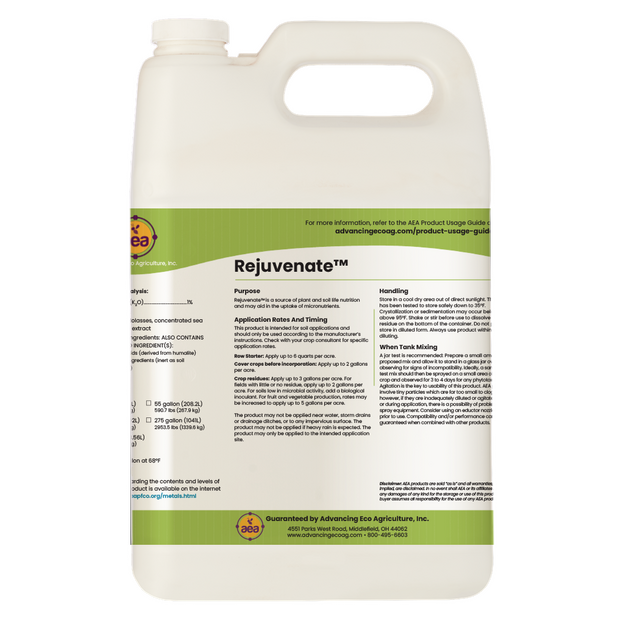
1. Rejuvenate™ (1 quart / acre)
- Provides simple sugars to quickly boost the plant’s energy reserves
- Also contains other high-energy compounds
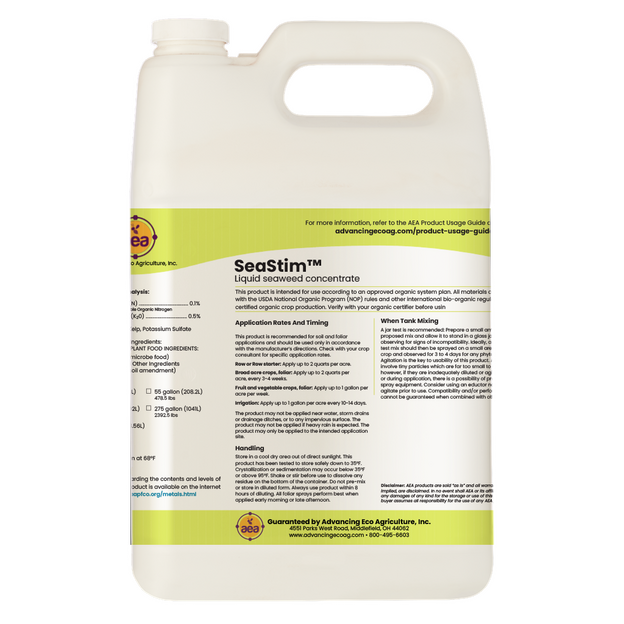
2. SeaStim™ (4 quarts / acre)
- Provides complex carbohydrates for energy
- Kelp extract provides antioxidants, osmolytes, and lots of other good stuff
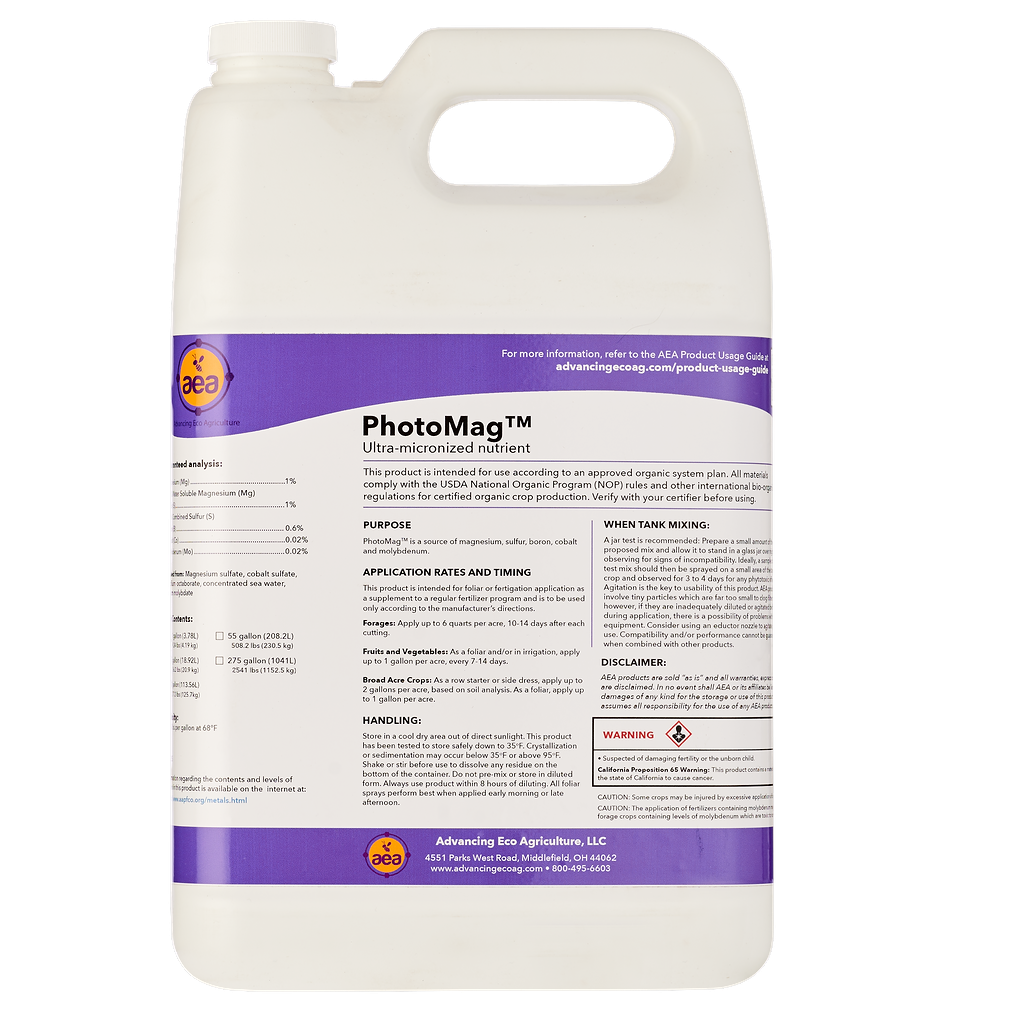
3. PhotoMag™ (4 quarts / acre)
- Supports photosynthesis with Mg, S, B, Mo, Co
- This helps the plant produce its own sugars for energy
Heat Stress Foliar
Shop
$48.62
Rejuvenate™
$39.26
SeaStim™

$38.00
PhotoMag™
One last thing about heat: note that it’s the leaf temperature that needs to be above 85°, not the air temperature.
- Plants with high lipid levels make waxy leaves, which not only reflect heat, but can help cool the leaf.
- We’ve seen blocks using a full AEA nutritional protocol with waxy leaves that can have significantly lower leaf temperature than neighboring blocks.
- John Kempf describes this in his latest Ask Me Anything Webinar.
Works Cited:
Here is some research about seaweed & heat stress.