
No products in the cart.
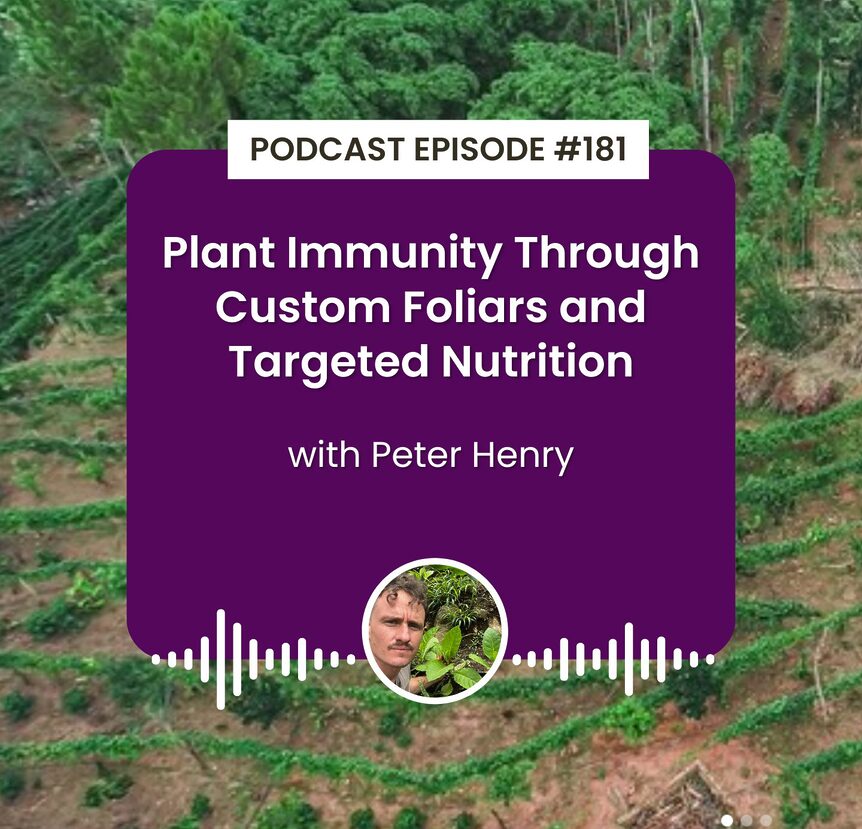
Peter Henry is a first-generation farmer who manages a diverse, seven-hectare operation in the mountainous terrain of the Dominican Republic alongside a dedicated four-person workforce. He transitioned to agriculture during the pandemic after a successful career as a tech executive and startup vice president, initially purchasing the abandoned land with the intent of establishing a shade-grown specialty coffee farm. After encountering significant challenges with his initial coffee crops, Peter successfully shifted his operation toward passion fruit and a highly specialized niche market growing traditional African heirloom vegetables and tubers for buyers in the United States and Canada.
Peter focuses heavily on biological soil health and precise nutritional balance instead of conventional chemical applications. He works closely with Advancing Eco Agriculture (AEA) to run on-farm trials and design sophisticated nutritional programs using AEA’s data-driven inputs. By utilizing rigorous soil testing to address extreme iron and manganese imbalances, Peter designs custom foliar stacks delivered through a specialized micro-sprinkler system to proactively build plant immunity and suppress heavy tropical disease pressure.
In this episode, John and Peter discuss:
- How Peter manages a complex landscape by separating the farm into distinct irrigation sectors to address vastly different soil mineral profiles on opposite sides of a river.
- Utilizing an aggressive pre-planting soil amendment strategy that combines lime and custom humic-complexed fertilizers based on comprehensive soil tests<!–>
- How the operation completely avoids synthetic nitrogen applications because excess nitrogen immediately triggers insect pressure and fungal blights across his pepper and okra crops –>.
- Peter designing an innovative micro-sprinkler trellis system to broadcast humics and biology over multiple hectares in just over an hour<!–>
- Mixing AEA’s Humacarb, HoloPhos, and Spectrum directly into the irrigation system to actively inoculate both the soil and plant foliage with beneficial microbes–>.
- How running an on-farm trial of AEA’s Pinion product for six weeks successfully eliminated severe bacterial leaf spot and stem issues on highly susceptible heirloom bell pepper crops<!–>
- Integrating AEA’s Rebound Copper alongside Rebound Molybdenum to completely reverse visual deficiencies and provide a dramatic greening effect on the farm’s terraced pepper fields–> .
- Utilizing AEA’s SeaShield and MacroPak to safely deliver trace organic nitrogen and essential amino acids without overriding the plants’ reproductive cycles <!–>.
Additional Resources
To follow Peter’s farm on Instagram, please visit: https://www.instagram.com/imfarmerpete/ or @imfarmerpete.
To learn more about AEA’s products, please visit: https://advancingecoag.com
To learn more about AEA’s Pinion, please visit: https://advancingecoag.com/product/pinion/
About John Kempf
John Kempf is the founder of Advancing Eco Agriculture (AEA). A top expert in biological and regenerative farming, John founded AEA in 2006 to help fellow farmers by providing the education, tools, and strategies that will have a global effect on the food supply and those who grow it.
Through intense study and the knowledge gleaned from many industry leaders, John is building a comprehensive systems-based approach to plant nutrition – a system solidly based on the sciences of plant physiology, mineral nutrition, and soil microbiology.
Support For This Show & Helping You Grow
Since 2006, AEA has been on a mission to help growers become more resilient, efficient, and profitable with regenerative agriculture.
AEA works directly with growers to apply its unique line of liquid mineral crop nutrition products and biological inoculants. Informed by cutting-edge plant and soil data-gathering techniques, AEA’s science-based programs empower farm operations to meet the crop quality markers that matter the most.
AEA has created real and lasting change on millions of acres with its products and data-driven services by working hand-in-hand with growers to produce healthier soil, stronger crops, and higher profits.
Beyond working on the ground with growers, AEA leads in regenerative agriculture media and education, producing and distributing the popular and highly-regarded Regenerative Agriculture Podcast, inspiring webinars, and other educational content that serve as go-to resources for growers worldwide.
Learn more about AEA’s regenerative programs and products: https://www.advancingecoag.com
–>
Podcast Transcript
0:00 – 0:01
Remember, your last name is Alan, correct?
0:02 – 0:03
Henry, Peter Henry.
0:03 – 0:04
Henry.
0:05 – 0:06
Yes.
0:07 – 0:07
Alan would be cool, though.
0:08 – 0:11
I wonder where I got that from.
0:14 – 0:15
Hi, friends. This is John.
0:15 – 0:17
Welcome back to the Regenerative
0:17 – 0:19
Agriculture Podcast, where we have all
0:19 – 0:21
kinds of fun conversations related to
0:21 – 0:23
improving our soil health and our plants'
0:23 – 0:25
health and ultimately our health by the
0:25 – 0:27
cultivation and production of very high
0:27 – 0:28
quality food.
0:28 – 0:30
Thank you all for being here, for tuning
0:30 – 0:31
in, and for listening.
0:31 – 0:33
I'm here today with Peter.
0:33 – 0:35
Henry from Puerto Rico, who is someone
0:35 – 0:36
I've been looking forward to chatting with
0:36 – 0:37
for quite a while.
0:37 – 0:40
Peter, I've heard about the awesome things
0:40 – 0:42
that you're doing on your operation from
0:42 – 0:43
our team here at AEA.
0:44 – 0:47
Tell us a bit about your personal journey
0:47 – 0:48
and story and your farming context and
0:48 – 0:50
what you have going on.
0:51 – 0:54
Cool. So it looks extremely excited to be
0:54 – 0:56
on the podcast. It's kind of surreal
0:56 – 0:57
hearing the intro.
0:58 – 1:00
Generally, I'm listening to the podcast on
1:00 – 1:03
our way to drop food off or like pick up
1:03 – 1:04
products and things like that.
1:04 – 1:07
So, amazing to be here.
1:07 – 1:10
I guess, like, super, super high level,
1:10 – 1:14
I've been more or less full time
1:14 – 1:17
farming for about six years now.
1:17 – 1:19
I would say we've had this farm for six
1:19 – 1:22
years. We purchased it in the pandemic.
1:23 – 1:26
And I've been like really living off of
1:26 – 1:29
farming for around three years now, where
1:29 – 1:33
it's a full time job that's supports our
1:33 – 1:35
family and the entire workforce.
1:35 – 1:39
I guess, like, super quick, I don't come
1:39 – 1:40
from a farming background.
1:40 – 1:43
I mean, I grew up between the United
1:43 – 1:45
States, Puerto Rico, spent some time in
1:45 – 1:47
other places like Venezuela, Mexico,
1:47 – 1:48
Colombia.
1:48 – 1:50
So I would say, like, farming has always
1:50 – 1:53
kind of been around me in the sense that
1:53 – 1:55
in most of those countries, and even in
1:55 – 1:57
the United States, there's always farms
1:57 – 1:59
like in Florida, California, you always
1:59 – 2:00
see farming around you.
2:00 – 2:03
You hear about farmers kind of see what
2:03 – 2:04
they're going through.
2:04 – 2:05
You consume their products.
2:04 – 2:08
But I never thought that this
2:08 – 2:11
would be what I do for
2:11 – 2:14
a living until maybe three years
2:14 – 2:18
ago. So, I mean, like, I was pretty big on
2:18 – 2:20
baseball most of my life.
2:20 – 2:23
Like, I was, I guess, like good enough to
2:23 – 2:25
play in college out of D1 school.
2:25 – 2:27
I wasn't good enough really to make it to
2:27 – 2:30
the pros or maybe like my mental worry
2:30 – 2:32
about some of the baseball games weren't
2:32 – 2:34
necessarily where they need to be to kind
2:34 – 2:36
of handle the ups and downs of like having
2:36 – 2:38
a three strikeout game and trying to
2:38 – 2:39
bounce back from that.
2:39 – 2:42
So when baseball was done, my most typical
2:42 – 2:45
pathway was well, I need to make some
2:45 – 2:48
money, so let me get into tech and I'm
2:48 – 2:51
bilingual, so I could work in sales or
2:51 – 2:53
something within Latin America.
2:53 – 2:54
And that's pretty much what I did.
2:54 – 2:57
And I was able to kind of get pretty high
2:57 – 3:00
up into like the VP level of a couple
3:00 – 3:02
different startups and start my own
3:02 – 3:04
startup, mainly in like digital identity
3:04 – 3:04
fintech space.
3:05 – 3:08
But I always kind of had an idea
3:08 – 3:11
that I wanted to live somewhere tropical,
3:11 – 3:14
maybe Puerto Rico, maybe Mexico, and have
3:14 – 3:15
my farm.
3:15 – 3:17
I just didn't know when that would be.
3:17 – 3:21
And so basically, that happened in the
3:21 – 3:24
pandemic where everything went remote.
3:24 – 3:27
So we just took a trip, my wife and I, to
3:27 – 3:29
the Dominican Republic, stayed there for
3:29 – 3:32
couple months and then I just was like how
3:32 – 3:34
much would a small, you know, abandoned
3:34 – 3:37
coffee farm or something, how much would
3:37 – 3:39
that cost? And it turned out to be not too
3:39 – 3:39
much.
3:39 – 3:43
So we ended up purchasing a farm of
3:43 – 3:45
about like seven hectares of land.
3:45 – 3:48
I'm not sure what that is in acres, but it
3:48 – 3:50
was purely 15 to 20.
3:50 – 3:52
It was 27 times. Yeah, around 20.
3:52 – 3:55
Yeah. So it was an abandoned farm.
3:55 – 3:57
Like the guy who had it before actually
3:57 – 3:59
worked for like one of the entities that
3:59 – 4:00
does stuff for like reforestation.
4:00 – 4:03
So he reforested with a bunch of like non
4:03 – 4:06
endemic pine trees and maybe some other
4:06 – 4:09
things like that, but it was kind of just
4:09 – 4:11
like abandoned. There's a little shack
4:11 – 4:14
there, so we just set up a couple solar
4:14 – 4:17
panels so I could work remotely and kind
4:17 – 4:19
of like do farming on the weekend or after
4:19 – 4:21
the work day was done.
4:21 – 4:24
But at that point in like 2020, it really
4:24 – 4:26
wasn't something that I was thinking about
4:26 – 4:27
doing full time.
4:28 – 4:31
And I guess like a little bit of
4:31 – 4:33
background into how we got to this part
4:33 – 4:36
was probably in high school, I started
4:36 – 4:37
roasting coffee.
4:38 – 4:39
So, like, buying beans from Sweet Maria's
4:39 – 4:41
and roasting it. And I think that that's
4:41 – 4:43
really what got me into farming because I
4:43 – 4:45
started seeing, like, oh, like there's
4:45 – 4:46
these different varietal types and these
4:46 – 4:48
different flavor profiles and stuff like
4:48 – 4:51
that. So, at first, it was kind of like,
4:51 – 4:53
you know, specialty coffee is really cool.
4:53 – 4:55
How do I, you know, roast my own beans?
4:55 – 4:57
Maybe I'll open up my own roastery, but
4:57 – 4:59
that's quickly turned into actually
4:59 – 5:01
wanting to grow the The trees myself and
5:01 – 5:04
kind of all that, the entire process of
5:04 – 5:05
coffee.
5:05 – 5:07
So, when we bought the farm, the actually
5:07 – 5:10
the idea around me working on the farm was
5:10 – 5:13
to turn it into kind of a specialty coffee
5:13 – 5:16
farm, the whole thing, shade growing, all
5:16 – 5:17
that kind of stuff.
5:17 – 5:19
I didn't really know much, too much about
5:19 – 5:21
farming, row cropping, all that kind of
5:21 – 5:24
stuff, but that's how we kind of got here.
5:25 – 5:27
And we actually did plant some coffee.
5:27 – 5:30
We planted the entire farm in coffee, but
5:30 – 5:33
I guess like when you do something, the
5:33 – 5:36
first time and you're kind of like a
5:36 – 5:38
newbie to it, you don't necessarily
5:38 – 5:39
understand the complexities about
5:39 – 5:42
varieties or the importance of like good
5:42 – 5:44
seed genetics, good nurseries, and stuff
5:44 – 5:46
like that. So we went through pretty much,
5:46 – 5:48
we did all the mistakes that you're
5:48 – 5:49
probably gonna make.
5:51 – 5:53
We quickly, oh, the pain, the pain of
5:53 – 5:54
learning from experience.
5:54 – 5:58
Oh, yeah. So we quickly got rid of the
5:58 – 6:00
coffee. We still have some, like a couple
6:00 – 6:02
thousand plants, but we, We really flipped
6:02 – 6:04
that into actually a passion fruit
6:04 – 6:05
operation.
6:05 – 6:08
And from the passion fruit operation We
6:08 – 6:12
got to where we are today, where we're
6:12 – 6:15
mainly focusing on a niche market in the
6:15 – 6:18
United States and Canada, where our buyers
6:18 – 6:21
are generally supermarkets and direct to
6:21 – 6:23
consumers in the African diaspora, mainly
6:23 – 6:26
from Nigeria, who are looking for their
6:26 – 6:29
heirloom type vegetables and tubers to be
6:29 – 6:32
able to cook their traditional foods.
6:32 – 6:34
And currently, right now In the market,
6:34 – 6:37
they have to adapt to substitutes, which
6:37 – 6:39
don't necessarily have the same flavor
6:39 – 6:41
profiles or the quality that they're
6:41 – 6:42
looking for.
6:42 – 6:44
So that's kind of how we got into that.
6:44 – 6:47
I'm happy to jump into how we got to that
6:47 – 6:49
niche market as well, as it's a pretty
6:49 – 6:50
interesting story.
6:50 – 6:51
Yeah, I'd love to get that story.
6:51 – 6:54
And then for you to elaborate a little bit
6:54 – 6:55
on many of our listeners, I'm sure, are
6:55 – 6:57
not familiar with what the production of
6:57 – 6:59
passion food or some of these more
6:59 – 7:00
tropical plants looks like.
7:00 – 7:02
So tell us a little bit about the actual.
7:02 – 7:04
Process and the management of the farming
7:04 – 7:05
operation as well.
7:06 – 7:09
Of course. Yep. Passion fruit, we're
7:09 – 7:12
actually going to be going back to it.
7:12 – 7:15
I just picked up a new variety of
7:15 – 7:18
a passion fruit called Gulupa, which is
7:18 – 7:20
from Huila in Colombia.
7:20 – 7:23
So it's, I guess, pretty similar to what
7:23 – 7:25
you guys have in the United States, where
7:25 – 7:27
it's a smaller red passion fruit.
7:27 – 7:30
In Colombia, Brazil, Dominican Republic,
7:30 – 7:34
Puerto Rico, Mexico, you generally will
7:34 – 7:37
find the larger yellow one.
7:38 – 7:40
In the US, you probably won't find the
7:40 – 7:42
Larger yellow passion fruits because
7:42 – 7:43
they're actually banned from import.
7:43 – 7:45
I think there's only like two countries
7:45 – 7:47
that can import passion fruits.
7:47 – 7:49
And generally, the consumers and the
7:49 – 7:50
buyers want the red passion fruit.
7:50 – 7:53
So you generally won't find that unless
7:53 – 7:54
you go out of the country.
7:54 – 7:58
So the variety that we were growing before
7:58 – 8:01
was a Brazilian variety where it's like a
8:01 – 8:03
giant passion fruit.
8:03 – 8:05
It's a variety called Sol, it's from
8:05 – 8:06
Brazil. And each passion fruit weighs
8:06 – 8:07
about 450 to 600 grams.
8:06 – 8:09
They're just
8:09 – 8:12
these massive
8:12 – 8:15
fruits. But the ones that are
8:15 – 8:19
better for export are generally red and
8:19 – 8:22
smaller, weighing about 100, 110 grams.
8:22 – 8:25
In terms of a passion fruit orchard, I
8:25 – 8:29
guess, an just excuse me if some of my
8:29 – 8:32
terms might sound weird in English because
8:32 – 8:34
I literally only know most terms of
8:34 – 8:36
farming in Spanish.
8:36 – 8:38
So I'm going to try to get them going.
8:38 – 8:41
But essentially, a passion fruit orchard
8:41 – 8:44
is more or less set up like a
8:44 – 8:45
wine vineyard.
8:47 – 8:48
It's a semi perennial plant.
8:48 – 8:51
So you could generally push it to maybe
8:51 – 8:54
three or four years before you have to
8:54 – 8:55
replant.
8:55 – 8:57
Maybe it could possibly go.
8:57 – 9:00
A little bit longer, but if you want
9:00 – 9:02
optimal production per tree and per
9:02 – 9:04
hectare, generally replanting is going to
9:04 – 9:05
be important.
9:05 – 9:09
And I would say in passion fruit, a lot of
9:09 – 9:11
people have issues because it is quite
9:11 – 9:14
susceptible to a bunch of disease.
9:14 – 9:17
So you generally have atracnose, which is
9:17 – 9:21
a big one. You have a lot of like
9:21 – 9:23
PTM, fusarium, damping off, rice octonia,
9:23 – 9:24
all those good guys.
9:24 – 9:27
But really, Fusarium is a pretty big one
9:27 – 9:30
that attacks the root zone in most
9:30 – 9:31
plantations. And then a lot of like leaf
9:31 – 9:33
blight. So you'll have a lot of issues
9:33 – 9:36
with alternaria, which is the big one,
9:36 – 9:39
which is pretty dangerous to the passion
9:39 – 9:42
fruit because it will dry up the plant if
9:42 – 9:45
you don't catch it soon enough.
9:45 – 9:49
And what really affects the quality of
9:49 – 9:53
the fruit, really, is the atrachnos and
9:53 – 9:55
the septoria type blight.
9:55 – 9:57
You might have some bacterial diseases,
9:57 – 9:59
but generally these are the things that
9:59 – 10:02
make it so. A lot of passion fruit growers
10:02 – 10:06
have a lot of issues and have to use
10:06 – 10:07
a ton of chemicals.
10:08 – 10:11
And so I always say if you are going to
10:11 – 10:14
any of these countries, beware of the
10:14 – 10:16
passion fruit that you're buying because
10:16 – 10:18
it's probably pretty high on the residual
10:18 – 10:20
chemical level because they're using
10:20 – 10:22
everything from carbonazine to all your
10:22 – 10:24
triosols to Rita Mill, like all those
10:24 – 10:27
types of things on a constant basis.
10:27 – 10:29
And because they're not going for export,
10:29 – 10:31
a lot of times they're spraying today
10:31 – 10:33
harvesting tomorrow and it's just got to
10:33 – 10:37
be careful. And I think a lot of that
10:37 – 10:41
has to do with possibly genetics, with the
10:41 – 10:43
seeds. A lot of these diseases actually
10:43 – 10:45
come from the nurseries, which has been a
10:45 – 10:48
big challenge for us across the board with
10:48 – 10:49
all of our vegetables.
10:49 – 10:51
We generally have our own nursery right
10:51 – 10:54
now on the farm that we built out to avoid
10:54 – 10:55
those issues.
10:55 – 10:58
But I would say, at least in the Dominican
10:58 – 11:00
Republic, Colombia, and Mexico, I have
11:00 – 11:03
experienced. Or I have experience in that,
11:03 – 11:06
most of these horticultural crops bring
11:06 – 11:09
disease into the fields and they cause,
11:09 – 11:12
they have a lot of economic losses for
11:12 – 11:15
growers. So in our case, we actually had
11:15 – 11:18
to deal with all of those diseases plus a
11:18 – 11:21
virus. And the problem with the virus,
11:21 – 11:23
which is, I'm not sure what the variety of
11:23 – 11:26
the virus was, it could have been a tomato
11:26 – 11:29
virus or it could have been a tobacco
11:29 – 11:31
virus, but One of those varieties actually
11:31 – 11:32
lives within the seeds.
11:32 – 11:34
So it's really hard to know until you're
11:34 – 11:37
seven months in and then you start seeing
11:37 – 11:38
issues with the virus.
11:38 – 11:40
And so, like, the virus will generally
11:40 – 11:42
create, like, kind of like a shriveled
11:42 – 11:44
fruit that looks really weird and, like,
11:44 – 11:46
make the leaves look pretty blotchy.
11:46 – 11:49
So, those are a bunch of things that you
11:49 – 11:51
have to figure out.
11:51 – 11:54
But in terms of, like, the way you
11:54 – 11:57
can grow passion fruit, generally, you
11:57 – 11:59
grow it like a grapevine.
11:59 – 12:02
Like a more or less like a grapevine, but
12:02 – 12:05
you just need to have a taller trellis
12:05 – 12:05
system.
12:05 – 12:09
We generally put it around in feet, maybe
12:09 – 12:12
seven feet high from the ground with a 12
12:12 – 12:15
gauge wire and generally bamboo stakes.
12:15 – 12:17
And then generally, you're planting
12:17 – 12:20
traditionally, you would plant about 25
12:20 – 12:22
meters by three meters.
12:23 – 12:26
What I figured out is actually when you do
12:26 – 12:28
a bunch of different cutting.
12:28 – 12:31
Or trimmings on the plant, you could
12:31 – 12:33
actually increase the density a lot more.
12:33 – 12:34
So, I'm actually Planting around 65
12:34 – 12:35
centimeters by about three meters.
12:34 – 12:38
So, I'm increasing that a lot more,
12:38 – 12:42
but it takes a lot of prunings
12:42 – 12:45
to be able to get the plant
12:45 – 12:49
to fruit and be productive during its
12:49 – 12:50
life cycle.
12:51 – 12:53
And yeah, I think the other cool thing
12:53 – 12:55
about passion fruit, and if you have a
12:55 – 12:57
vine at home, is if you want good
12:57 – 12:59
production, the number one thing you could
12:59 – 13:01
really do besides giving a good nutrition
13:01 – 13:03
with calcium and moly and boron is the
13:03 – 13:06
manual of public Molly and Boron is the
13:06 – 13:07
manual pollinization.
13:06 – 13:09
So you have to pollinate it by hand every
13:09 – 13:09
single day.
13:10 – 13:10
Wow.
13:10 – 13:13
If you don't pollinate it by hand, you'll
13:13 – 13:14
have a very poor production.
13:14 – 13:17
The fruit might look like it's full, but
13:17 – 13:19
it will be empty.
13:20 – 13:23
And there's only one bee that pollinates
13:23 – 13:26
it. It's like a sila copa, it's a big
13:26 – 13:27
bumblebee type thing.
13:27 – 13:30
But the regular bees love the pollen, but
13:30 – 13:33
they won't do anything but rob the pollen
13:33 – 13:36
from your tree. So if you're not getting
13:36 – 13:39
out there around 12 in the afternoon to
13:39 – 13:41
pollinate it by hand, good production.
13:41 – 13:44
Like bees will be happy, but your
13:44 – 13:45
pocketbook will probably be suffering.
13:46 – 13:47
Wow.
13:48 – 13:51
All right. So I want to dig deeper into
13:51 – 13:53
you mentioned the number one thing is good
13:53 – 13:54
nutrition management.
13:54 – 13:57
And I know based on, I'm not really
13:57 – 13:59
familiar with your operation, but people
13:59 – 14:01
have been highly recommending that I speak
14:01 – 14:02
with you.
14:02 – 14:03
And that is indicated to me that you're
14:03 – 14:04
doing something different from the
14:04 – 14:07
mainstream. So, what's I'd like to
14:07 – 14:09
understand how are you managing diseases
14:09 – 14:12
and how are you managing nutrition?
14:13 – 14:15
And how does that compare with either what
14:15 – 14:17
you've been doing historically or what
14:17 – 14:18
contemporary practices are?
14:20 – 14:22
Yeah, for sure. I think so.
14:22 – 14:25
My kind of journey to the regen ag space,
14:25 – 14:27
if you will, kind of like don't like the
14:27 – 14:29
labels of regen. And all these other
14:29 – 14:31
things because I think it's just like
14:31 – 14:32
they're great for dividing people.
14:33 – 14:34
Yeah, that's what it's always like us
14:34 – 14:36
versus them or stuff like that.
14:36 – 14:39
I feel like there's a couple of things.
14:39 – 14:42
Like for me, I live on the farm.
14:43 – 14:46
We have workers here that also live on the
14:46 – 14:50
farm, and our house is quite close to the
14:50 – 14:53
crops. So just from like my own health
14:53 – 14:54
standpoint, I don't necessarily feel
14:54 – 14:57
comfortable mixing up a bunch of different
14:57 – 14:57
mixtures with.
14:58 – 15:00
Bunch of different molecules and spray
15:00 – 15:03
those just from a, I guess, an
15:03 – 15:04
egotistical, selfish standpoint.
15:05 – 15:06
I don't think that that's a great idea.
15:07 – 15:09
Second off, if you're looking to actually
15:09 – 15:13
export to Europe or the US, you have to be
15:13 – 15:15
very careful about what molecules you put
15:15 – 15:18
on because you have the pre harvest
15:18 – 15:19
interval timeframe.
15:19 – 15:22
And so it actually limits the amount of
15:22 – 15:24
chemicals you can use.
15:24 – 15:27
And I would say the last part, though, is
15:27 – 15:30
actually from a standpoint of what I see
15:30 – 15:31
works and what doesn't work.
15:32 – 15:35
And I've just seen that chemicals don't
15:35 – 15:36
necessarily do much.
15:36 – 15:38
I think they're good tools in the sense
15:38 – 15:41
that if you have an issue and it's going
15:41 – 15:43
to cause an economic issue for you down
15:43 – 15:45
the line and you could understand how to
15:45 – 15:47
use a chemical in the right way, that's
15:47 – 15:50
great. But if you don't correct the
15:50 – 15:53
underlying issues of nutrition and biology
15:53 – 15:56
after which or before from a preventative
15:56 – 15:59
manner, You're going to be basically a
15:59 – 16:01
slave to using chemical after chemical.
16:02 – 16:04
And as these things, like, for example,
16:04 – 16:06
aphids that basically can morph, like one
16:06 – 16:09
aphid can turn into millions of aphids in
16:09 – 16:11
a blink of an eye, there's no way that
16:11 – 16:13
those chemicals are going to penetrate all
16:13 – 16:15
of those guys at one time.
16:15 – 16:17
And you could just cause resistance and
16:17 – 16:21
issues. So basically, how I've
16:21 – 16:24
been approaching nutrition is
16:24 – 16:27
one, trying to understand.
16:28 – 16:31
What the plants need in terms of nutrition
16:31 – 16:35
to prevent or to cure any type of issues
16:35 – 16:37
or ailments that come onto the farm.
16:38 – 16:41
And then see how I can incorporate
16:41 – 16:45
more biology and more carbon into the
16:45 – 16:49
system to allow me to stop using
16:49 – 16:52
completely any type of chemical input or
16:52 – 16:56
even like a copper fungicide type thing.
16:56 – 16:59
So, in terms of new nutrition management I
16:59 – 17:02
think like my main thing came from when we
17:02 – 17:04
started the passion fruit crop.
17:04 – 17:08
We had a bunch of issues with these, with
17:08 – 17:09
a couple of diseases.
17:09 – 17:13
And so, me kind of being a newbie into
17:13 – 17:16
both passion fruit and kind of into
17:16 – 17:19
farming, it was like my second year and
17:19 – 17:22
kind of my first year actually doing like
17:22 – 17:25
a real agricultural setup as you know,
17:25 – 17:27
with coffee, it's fairly easy.
17:27 – 17:29
They're perennial trees, you don't have so
17:29 – 17:31
many like nutritional requirements as you
17:31 – 17:33
would with a horticultural crop.
17:33 – 17:37
And so, I kind of followed for
17:37 – 17:40
the first few months the traditional way
17:40 – 17:44
of doing it. Um, I had a couple of
17:44 – 17:45
colleagues and friends in Colombia that do
17:45 – 17:47
big production, I kind of just like follow
17:47 – 17:50
their plan. So, you know, Rito Mill, mix
17:50 – 17:53
it with some carbendazine, maybe come
17:53 – 17:56
through with some other type of molecule.
17:57 – 17:58
Um, maybe you know, you need a Neonicotine
17:58 – 18:01
insecticide. And kind of like
18:01 – 18:05
you're throwing these things on
18:05 – 18:06
preventatively.
18:06 – 18:08
And then you're not necessarily focusing
18:08 – 18:11
on the nutrition. So while there was
18:11 – 18:14
nutrition in, like the products that they
18:14 – 18:16
were recommending were like chelated with
18:16 – 18:20
EDTA and some other things that I kind of
18:20 – 18:21
wasn't necessarily convinced.
18:21 – 18:24
As I started questioning what they were
18:24 – 18:26
telling me and seeing The results that I
18:26 – 18:28
was getting, and that the disease never
18:28 – 18:29
went away.
18:30 – 18:33
That's when I started to really
18:33 – 18:37
dive into plant nutrition, understand the
18:37 – 18:40
whole context between mineral deficiencies
18:40 – 18:44
and mineral excess, and why certain
18:44 – 18:47
things happen at certain timeframes within
18:47 – 18:50
the crop's life cycle.
18:50 – 18:53
And that kind of drove me into solving
18:53 – 18:56
issues from a more nutritional aspect than
18:56 – 18:57
from a more chemical aspect.
18:57 – 19:00
So, I quickly got out of that and started
19:00 – 19:03
trying to find a way where I could reduce
19:03 – 19:06
that chemical load and be able to, you
19:06 – 19:08
know, have a healthy crop and have
19:08 – 19:10
something that produces money, but also
19:10 – 19:13
doesn't kill me in the process and kills
19:13 – 19:16
other people eating it in the process and
19:16 – 19:18
killing all the bees and everything like
19:18 – 19:19
that.
19:19 – 19:23
So, that's kind of how I got into that
19:23 – 19:25
time frame, into that mindset.
19:25 – 19:29
So, bring us just maybe flash forward
19:29 – 19:31
to today. Well, you could also talk about
19:31 – 19:33
the transition, but what does your
19:33 – 19:34
nutrition management look like today?
19:35 – 19:36
Yeah.
19:36 – 19:39
So today, we mainly focus on foliar
19:39 – 19:40
feeding.
19:41 – 19:44
And we also do a couple soil drenches
19:44 – 19:45
right now.
19:46 – 19:49
And I also focus on
19:49 – 19:52
a pretty aggressive pre planting
19:52 – 19:54
soil amendment plan.
19:57 – 20:01
So generally, what I do is before planting
20:01 – 20:03
or anything like that, I'm taking a
20:03 – 20:06
complete melic with your molly, with your
20:06 – 20:08
total carbon to nitrogen, with your
20:08 – 20:10
nitrates and your ammonium.
20:10 – 20:11
And then I'm also taking a haney.
20:11 – 20:15
And then from there,
20:15 – 20:18
I'll take a soil
20:18 – 20:22
test per irrigation sector.
20:22 – 20:25
So, our farm is pretty mountainous terrain
20:25 – 20:28
and we have a river that goes through it.
20:28 – 20:32
So on one side of the river, the
20:32 – 20:35
slope like super red and very high
20:35 – 20:37
manganese and low iron.
20:37 – 20:39
Well, relatively low iron to manganese.
20:39 – 20:41
Like, put in perspective, we're about 208
20:41 – 20:43
parts per million in manganese and about
20:43 – 20:46
80 parts per million in iron on this side
20:46 – 20:50
of the river. And on the other side of the
20:50 – 20:52
river, we're about 108 parts per million
20:52 – 20:55
iron and about 60 to 50 parts per million
20:55 – 20:57
manganese on that side of the river.
20:57 – 21:01
We're talking about Generally red sandy
21:01 – 21:03
loam soils, pretty acidic.
21:04 – 21:07
Before liming, you're looking at like a 49
21:07 – 21:08
to 52 Ouch.
21:09 – 21:11
Yeah, it's pretty gnarly.
21:11 – 21:15
And generally, we have like two
21:15 – 21:18
seasons, like a rainy season and
21:18 – 21:21
a dry season. Right now, it's just kind
21:21 – 21:23
of. I was just about to ask, what do the
21:23 – 21:25
rainfall patterns and the quantity of
21:25 – 21:26
rainfall look like?
21:27 – 21:27
Yeah, so generally, I mean, you're
21:27 – 21:28
supposed To have from around November to
21:28 – 21:29
now, it should be dry.
21:28 – 21:32
And then in May, the rain
21:32 – 21:35
should start picking up and roll
21:35 – 21:38
through the entire monsoon season into
21:38 – 21:39
November again.
21:40 – 21:43
What that's kind of looked like in the
21:43 – 21:45
last three years has really been
21:45 – 21:47
unpredictable, where, for example, last
21:47 – 21:49
year it rained until April, stopped
21:49 – 21:52
raining in May, and then it rained again
21:52 – 21:54
until November, and then it just rained
21:54 – 21:57
every single day. From November into about
21:57 – 21:59
two weeks ago.
21:59 – 22:01
And then the rains have stopped.
22:01 – 22:04
So, really, like May, which used to be the
22:04 – 22:06
rainy season in most of the subtropics, at
22:06 – 22:08
least in this part of the world, has
22:08 – 22:11
turned into more like a dry season.
22:11 – 22:13
So, May, June, July, August, September,
22:13 – 22:16
October are pretty dry, which makes things
22:16 – 22:19
actually a lot easier for us to manage.
22:19 – 22:21
Luckily, we have water and we're able to
22:21 – 22:22
irrigate.
22:22 – 22:25
And then in the season when it's a little
22:25 – 22:29
bit colder, it also Is now raining a lot
22:29 – 22:32
more because a lot of the cold fronts push
22:32 – 22:36
down and pass a lot of rain into the
22:36 – 22:36
system.
22:37 – 22:39
So I would say, from a management
22:39 – 22:41
standpoint, one of our biggest hurdles,
22:41 – 22:44
besides the highly acidic and minerally
22:44 – 22:46
complex and the complexity on the mineral
22:46 – 22:49
side of things on the soil, is the rain.
22:50 – 22:52
Because when you're looking at those types
22:52 – 22:55
of soils, when the soil gets saturated and
22:55 – 22:57
reduced, you're looking at Issues, maybe
22:57 – 23:01
not from a. I haven't ever seen, we were
23:01 – 23:04
talking about this a little bit earlier,
23:04 – 23:07
but like I haven't seen like manganese or
23:07 – 23:11
iron toxicities, but I have seen that
23:11 – 23:13
those things do cause deficiencies or
23:13 – 23:15
issues with other nutrients.
23:15 – 23:18
So for example, like generally phosphorus,
23:18 – 23:21
potassium is something that is generally
23:21 – 23:24
down, calcium is also something that is
23:24 – 23:26
generally an issue, and boron.
23:26 – 23:28
And molybdenum are generally an issue.
23:28 – 23:32
So, when we pulled out the soil test, I
23:32 – 23:34
mean, some of the biggest limiting
23:34 – 23:36
factors, besides the excess of manganese
23:36 – 23:39
and iron, have been kind of like the
23:39 – 23:40
absence of molybdenum.
23:40 – 23:43
I think it's like 001 parts per million
23:43 – 23:45
across the entire farm.
23:45 – 23:47
So, it's essentially the detection
23:47 – 23:48
threshold.
23:48 – 23:50
Yeah. So, there's basically like no
23:50 – 23:52
molybdenum. And then we're at like 20 to
23:52 – 23:54
30 parts per million in nitrates and
23:54 – 23:56
around like six or seven in ammonium.
23:56 – 23:58
So, obviously, there's going to be some
23:58 – 24:00
issues with disease and bugs there because
24:00 – 24:03
if I don't have molybdenum, then how am I
24:03 – 24:04
going to convert those nitrates into
24:04 – 24:05
something useful for the plant?
24:05 – 24:08
On the high manganese side of things, just
24:08 – 24:12
to add more complexity to it, we have 60
24:12 – 24:13
parts per million in sulfur.
24:15 – 24:16
Intriguing.
24:17 – 24:18
That's interesting.
24:18 – 24:20
Like, I guess that's you have an igneous
24:20 – 24:21
soil.
24:21 – 24:23
It's uncommon to have that combination of
24:23 – 24:25
high sulfur with the high rainfall pattern
24:25 – 24:27
that you have, unless you have an igneous
24:27 – 24:28
soil. Yeah, it's fascinating.
24:29 – 24:31
And that's on just one side of the river
24:31 – 24:32
because as soon as I cross the other side
24:32 – 24:34
of the river, I'm at 10 to 11 parts per
24:34 – 24:35
million.
24:35 – 24:39
So that's been quite interesting.
24:39 – 24:42
And on the side where there's high sulfur,
24:42 – 24:44
I generally have most of the disease
24:44 – 24:46
pressure because, I mean, with the sulfur,
24:46 – 24:49
from what I understand, that's going to be
24:49 – 24:51
blocking out the calcium that I have.
24:51 – 24:54
It's going to be acidifying the soil as it
24:54 – 24:57
gets kind of like saturated and might
24:57 – 24:59
create a more, a less oxygenated
24:59 – 25:01
environment and creates all sorts of
25:01 – 25:04
issues there. So, in a sense, from a soil
25:04 – 25:06
type or a soil mineral profile, it's
25:06 – 25:08
almost like you're farming two different
25:08 – 25:09
farms.
25:10 – 25:13
Essentially, two different farms.
25:13 – 25:15
And I have four irrigation sectors on the
25:15 – 25:17
four different sides of things.
25:18 – 25:20
And so, generally, what I'm trying to do
25:20 – 25:24
to keep kind of like you Sanity and costs
25:24 – 25:26
down, I'm trying to have a semi omni
25:26 – 25:29
approach. But I do have different
25:29 – 25:31
varieties growing on different sections so
25:31 – 25:34
that if I do need to do a foliar, you
25:34 – 25:37
know, for the side with the high sulfur
25:37 – 25:39
that I don't want to add more sulfur to
25:39 – 25:42
the system or something like that, I can,
25:42 – 25:45
you know, do that one day and then I could
25:45 – 25:48
go to the other side and do another
25:48 – 25:49
application the next day.
25:50 – 25:52
So if you have irrigation available Why
25:52 – 25:55
did you choose to primarily focus on
25:55 – 25:55
foliar applications?
25:56 – 25:59
So, the complexity, and I'll talk a little
25:59 – 26:02
bit about the irrigation system because I
26:02 – 26:05
think one of my biggest challenges here,
26:05 – 26:06
especially running horticulture stuff.
26:06 – 26:08
So, with passion fruit, it was a little
26:08 – 26:09
bit easier to run irrigation.
26:09 – 26:12
We did micro aspirators, one per tree, but
26:12 – 26:14
you're talking about, you know, 60
26:14 – 26:16
centimeters, like on a about 60
26:16 – 26:19
centimeters on a line of plants, you're
26:19 – 26:21
talking about a plant between 60 to maybe
26:21 – 26:24
two meters between trees, and you have
26:24 – 26:26
three meters in an alleyway of space.
26:26 – 26:29
So there's less irrigation, there's less
26:29 – 26:32
materials that you need to irrigate from
26:32 – 26:36
that. But I think the biggest limiting
26:36 – 26:39
factor for me in terms of irrigation and
26:39 – 26:41
why I'm not necessarily fertigating with
26:41 – 26:44
drip line is I actually physically can't
26:44 – 26:47
do that because we have the mountainous
26:47 – 26:50
terrain that we've terraced out.
26:50 – 26:52
So we have everything terraced on kind of
26:52 – 26:55
like what you would see in maybe some of
26:55 – 26:57
the farms in Asia where they terrace them
26:57 – 26:58
out.
26:59 – 27:01
We've done that by hand with a pick and
27:01 – 27:03
hammer, me and the crew, which is like
27:03 – 27:04
four other people.
27:04 – 27:05
And we created like our own A frame.
27:05 – 27:07
So we terraced everything out.
27:07 – 27:10
And so we have everything with contour
27:10 – 27:13
lines. And so they do sell like a
27:13 – 27:17
drip line where it is a it's kind of
27:17 – 27:21
like a hose where it might be able to,
27:21 – 27:23
you know, follow the curve.
27:24 – 27:26
But the cost of that is extremely
27:26 – 27:27
elevated.
27:27 – 27:30
And so what I actually did was I, because
27:30 – 27:33
I'm pretty, I would say I've become an
27:33 – 27:35
expert at creating like a trellis system
27:35 – 27:37
from the passion fruit.
27:37 – 27:39
So we just created a trellis system in the
27:39 – 27:40
entire farm.
27:40 – 27:43
And then I took the irrigation lines and
27:43 – 27:46
I, instead of crossing them, Perpendicular
27:46 – 27:48
to the slope. I actually went with the
27:48 – 27:50
slope and just sent the irrigation lines
27:50 – 27:52
down with micro aspirators or micro
27:52 – 27:55
sprinklers. And so I have that
27:55 – 27:58
connected to a ventry system
27:58 – 28:02
and an injector. And so I actually can
28:02 – 28:04
do foliage from that system when I don't
28:04 – 28:06
have to have a backpack sprayer.
28:06 – 28:09
So, in that sense, I could wet everything,
28:09 – 28:12
I could get everything irrigated fairly
28:12 – 28:14
quickly. So, where a drip system, I would
28:14 – 28:16
need to run the drip line for maybe an
28:16 – 28:18
hour on a section or maybe 30 minutes.
28:18 – 28:22
I could pretty much get the water that.
28:22 – 28:24
The plants need in maybe five minutes.
28:24 – 28:27
So, you mentioned that you are primarily
28:27 – 28:28
doing foliar applications, but that
28:28 – 28:31
doesn't mean that you're using a sprayer,
28:31 – 28:33
you're sending it out through the micro
28:33 – 28:34
sprinkler system essentially.
28:35 – 28:39
Yes, I would say in last year, 100 of
28:39 – 28:42
all the applications were sent through the
28:42 – 28:44
sprayer for the irrigation system sprayer,
28:44 – 28:46
just essentially like a pivot.
28:46 – 28:48
I would say, like, I basically designed my
28:48 – 28:52
own pivot right now to hone down the new
28:52 – 28:54
nutrition a little bit better, it's kind
28:54 – 28:57
of like a mix. So I'm doing 50 backpack
28:57 – 29:00
sprayer and 50 sending it through the
29:00 – 29:01
system.
29:01 – 29:04
And what I've kind of done with the system
29:04 – 29:07
is the things I send through the system
29:07 – 29:10
are generally your humix and your biology.
29:10 – 29:14
And some stuff like
29:14 – 29:17
molybdenum. So far, like the humix, we're
29:17 – 29:19
using humicarp. That goes in, holofaust
29:19 – 29:20
goes in.
29:20 – 29:21
We'll use a spectrum PSB.
29:21 – 29:25
That will go in, white sugar will go
29:25 – 29:28
into the mix as well, and maybe sometimes
29:28 – 29:29
Bioco Gold.
29:30 – 29:32
Maybe I'm the only one using it like that,
29:32 – 29:33
but spraying it out.
29:34 – 29:36
Like I think that there's, I mean, there
29:36 – 29:38
should be microbes on the leaves and on
29:38 – 29:39
the floor and everything.
29:39 – 29:41
So just trying to broadcast that as best
29:41 – 29:42
as I can.
29:43 – 29:44
There are indeed.
29:44 – 29:47
And so like from there, what we'll do is
29:47 – 29:49
if I need to be more precise on some sort
29:49 – 29:51
of application, like for example with
29:51 – 29:52
pinion I'll go through with a backpack
29:52 – 29:55
sprayer. Or if I really want to get
29:55 – 29:58
potassium into the fruit, and I know that
29:58 – 30:02
we have a harvest coming up in like four
30:02 – 30:05
or five days, or maybe 10 days, then we'll
30:05 – 30:08
go with the backpack sprayer and we'll
30:08 – 30:11
probably maybe do like halo ka with some
30:11 – 30:14
rebal molly and some boron in there and
30:14 – 30:16
spray that out. But it really just depends
30:16 – 30:18
on kind of like the workload as well with
30:18 – 30:19
what we're doing.
30:20 – 30:22
Because for me to go with a backpack
30:22 – 30:25
sprayer, if I'm Spraying myself and I have
30:25 – 30:27
two other backpacks, then I need to have
30:27 – 30:30
two people or three people carrying jugs
30:30 – 30:32
of the liquid up the mountain, this and
30:32 – 30:35
that. And so I kind of lose a couple hours
30:35 – 30:38
of work time that we could be using to
30:38 – 30:40
weed or trellis or stuff like that.
30:41 – 30:44
So it's kind of just trying to figure out
30:44 – 30:47
what works best at that moment and just
30:47 – 30:50
understanding the best way to do it.
30:50 – 30:53
But I mean, the system.
30:53 – 30:56
That we created is really great because
30:56 – 30:59
I could essentially do a foliar across
30:59 – 31:03
like three hectares right now in like
31:03 – 31:05
an hour and 20 minutes.
31:05 – 31:08
Just me. Like I prepped the tank, like
31:08 – 31:12
pulled the diesel pump, and then I just
31:12 – 31:15
have to go run to the other side
31:15 – 31:19
of the river and switch out the key
31:19 – 31:20
valves and do that.
31:20 – 31:23
But I could get through that just myself
31:23 – 31:24
pretty easily.
31:25 – 31:28
So I think it just really depends on what
31:28 – 31:30
you're trying to do or how much product
31:30 – 31:31
you're trying to use.
31:31 – 31:33
Because you will, in this system, I have
31:33 – 31:36
to use probably three or 4X the amount of
31:36 – 31:38
product that I would be using on a
31:38 – 31:40
backpack sprayer just because of the
31:40 – 31:42
dilution from the pass through.
31:44 – 31:47
So we got to this conversation about
31:47 – 31:49
nutrition management and how you're
31:49 – 31:52
managing nutrition from a discussion on
31:52 – 31:54
disease pressure, disease susceptibility.
31:54 – 31:55
We're describing the quite intense disease
31:55 – 31:58
pressure that. This crop has generally.
31:58 – 32:02
How have You, how has that disease
32:02 – 32:05
pressure shifted with your different
32:05 – 32:07
approach to nutrition management?
32:08 – 32:11
Correct. So, yeah, I think like just to
32:11 – 32:13
follow back on that, because I think I got
32:13 – 32:16
a little bit off topic on the irrigation
32:16 – 32:18
system. So, essentially, how we manage the
32:18 – 32:20
nutrition is first and foremost, the soil
32:20 – 32:23
test is extremely important to have that
32:23 – 32:25
data point to understand what you want to
32:25 – 32:28
apply, what products you need, and what
32:28 – 32:29
diseases might come.
32:29 – 32:32
And so, generally what we do to control
32:32 – 32:36
pH is liming, and we'll mix that lime
32:36 – 32:39
to add a little bit more calcium to
32:39 – 32:43
the profile with gypsum, but only on the
32:43 – 32:44
side with low sulfur.
32:44 – 32:47
On the side where we have lots of sulfur,
32:47 – 32:49
the gypsum doesn't go in there.
32:49 – 32:53
And then we might even add
32:53 – 32:56
in some SOP, some potassium sulfate,
32:56 – 32:59
as well to some of those
32:59 – 33:03
minerals. And there's a pretty good
33:03 – 33:06
quality granular humic available here.
33:07 – 33:09
So I generally will mix everything with a
33:09 – 33:12
granular humic as we kind of like
33:12 – 33:14
broadcast that onto the growing lines.
33:14 – 33:18
So once we do that, then
33:18 – 33:21
my main focus in terms of
33:21 – 33:24
nutrition from a disease prevention
33:24 – 33:26
standpoint is focusing on.
33:26 – 33:29
The minerals that I know are going to be
33:29 – 33:31
difficult for the plant to get.
33:31 – 33:35
So, generally, I'm focusing on
33:35 – 33:38
calcium, I'm focusing on boron,
33:38 – 33:41
I'm focusing on molybdenum, zinc,
33:41 – 33:44
copper, and actually iron, just
33:44 – 33:47
given the antagonism with the
33:47 – 33:51
high manganese. So, those are generally
33:51 – 33:54
the main stacks that I try to focus on.
33:54 – 33:57
And I would also add phosphorus, is
33:57 – 34:00
something that, just from an observational
34:00 – 34:03
standpoint I've seen that the plants
34:03 – 34:05
really respond well to phosphorus
34:05 – 34:09
applications. So, really, no
34:09 – 34:11
nitrogen at all.
34:12 – 34:14
How common is that for passion fruit
34:14 – 34:16
production? I'm not familiar with common
34:16 – 34:17
nitrogen applications.
34:18 – 34:21
So, for passion fruit, for the growers
34:21 – 34:23
that know about passion fruit, they
34:23 – 34:26
generally don't use nitrogen too much.
34:26 – 34:30
A lot of them will use the maybe
34:30 – 34:33
like a calcium nitrate, maybe a ammonium
34:33 – 34:35
sulfate in the beginning stages.
34:36 – 34:39
But for passion fruit, if you use a lot of
34:39 – 34:41
nitrogen, especially in the early cycle of
34:41 – 34:44
the plant, you'll have a non reproductive
34:44 – 34:45
plant. You'll have a very vegetative
34:45 – 34:46
plant.
34:46 – 34:48
And it's really hard to reverse that.
34:49 – 34:52
So I guess it would be interesting if more
34:52 – 34:54
crops had that problem.
34:55 – 34:58
Oh, and I mean, that's from the
34:58 – 35:02
passion fruit into our peppers into our
35:02 – 35:05
African yams, okra, all of those crops,
35:05 – 35:08
African eggplant, there's very little, if
35:08 – 35:10
not any, nitrogen.
35:10 – 35:13
The only nitrogen that might get into the
35:13 – 35:15
system would be like an organic nitrogen,
35:15 – 35:18
for example, from macro pack or maybe
35:18 – 35:21
what's in seashield or an amino acid.
35:21 – 35:25
Both of which are very, very small
35:25 – 35:26
concentrations. Yeah.
35:26 – 35:27
They're small amounts.
35:27 – 35:30
And I mean, I have to check the, I don't
35:30 – 35:32
know the exact numbers on the soil test,
35:32 – 35:35
but I mean, we have per acre around like
35:35 – 35:38
28 to 30 pounds of nitrate and maybe nine
35:38 – 35:40
to 10 pounds of ammonium.
35:40 – 35:44
So if I were to ever need to use
35:44 – 35:47
some sort of nitrogen, probably the only
35:47 – 35:50
one I would really use would be maybe a
35:50 – 35:54
small foliar with a MAP or MAP, and
35:54 – 35:57
obviously complex that with a folic and a
35:57 – 35:58
Rebell Molly.
35:58 – 36:01
But I generally don't need to, I haven't
36:01 – 36:03
had the need to do that.
36:03 – 36:06
And on some areas where I've just played
36:06 – 36:10
around with and I've put like a 12, 24, 12
36:10 – 36:13
or like a 15, 6, 25 granular application,
36:13 – 36:16
within two weeks, that plant's going to
36:16 – 36:19
get some sort of disease pressure from an
36:19 – 36:22
insect and it will get some sort of issue
36:22 – 36:24
with like bacterial blight or some fungi
36:24 – 36:28
will get it. So I
36:28 – 36:31
try to. Really stay away
36:31 – 36:35
from the nitrogen and really focus on kind
36:35 – 36:38
of like the key nutrients that we need.
36:38 – 36:40
I think from a nutritional standpoint,
36:40 – 36:43
where I'd like to get at would be to start
36:43 – 36:44
doing sap tests.
36:45 – 36:47
We have just logistically, for me, it's
36:47 – 36:50
been a little bit difficult for me to get
36:50 – 36:52
those out, just given where we're based.
36:52 – 36:56
And I kind of like need to,
36:56 – 36:59
maybe it's my ADHD type personality, but
36:59 – 37:02
I kind of like, I want to
37:02 – 37:04
get that decision.
37:04 – 37:08
I want to be able to basically take the
37:08 – 37:11
sap in the field and understand what I
37:11 – 37:15
have right now so that the next day I
37:15 – 37:17
can put on a foliar application.
37:17 – 37:20
Just given in the horticulture crops like
37:20 – 37:23
pepper, eggplant, okra, you kind of need
37:23 – 37:25
to make that decision right away.
37:25 – 37:28
And so, waiting maybe a week or even two
37:28 – 37:30
weeks for a result.
37:30 – 37:32
You pass that time frame when you really
37:32 – 37:35
need to make a decision on if I have a
37:35 – 37:36
molybdenum or a potassium deficiency and I
37:36 – 37:38
get sprayed tomorrow on potassium, for
37:38 – 37:40
example, foliar, then maybe I can get rid
37:40 – 37:42
of aphids or some sort of white fly.
37:43 – 37:46
So we need to get on that.
37:46 – 37:49
But I would say from how I've been
37:49 – 37:51
managing that is just kind of like knowing
37:51 – 37:54
my soil really well and understanding what
37:54 – 37:57
is going to be more or less deficient from
37:57 – 37:59
visual signs. So one thing that has
37:59 – 38:00
actually worked out really.
38:00 – 38:03
For us is this year on our pepper crops,
38:03 – 38:06
I decided to intercrop it with sweet corn
38:06 – 38:10
because I had the grand idea that the corn
38:10 – 38:13
would inject carbon into the system and
38:13 – 38:16
consume the excess nitrogen, but it would
38:16 – 38:19
also serve as living stakes for me to tie
38:19 – 38:20
the peppers up.
38:21 – 38:24
So, we have a ton of bamboo on our
38:24 – 38:26
property. I planted like hundreds of trees
38:26 – 38:30
of bamboo, but it takes a lot of time and
38:30 – 38:33
effort to go pick the bamboo, cut it, put
38:33 – 38:36
in the stakes. So, preemptively, we did
38:36 – 38:39
that. And what I didn't notice because
38:39 – 38:42
those sweet corn got almost zero
38:42 – 38:45
nutrition, they just were kind of like
38:45 – 38:47
left to do their thing.
38:48 – 38:50
And basically, the main nutritional
38:50 – 38:52
deficiency that I saw visually on the
38:52 – 38:54
sweet corn was potassium.
38:54 – 38:56
No nitrogen issues, nothing with
38:56 – 38:58
phosphorus, nothing with any of the
38:58 – 39:00
microbes no magnesium or anything like
39:00 – 39:02
that. It was mainly potassium, which kind
39:02 – 39:06
of gave me the clue that if it's deficient
39:06 – 39:09
in corn while it's a C4 and it's not
39:09 – 39:13
a pepper, it's probably going to have the
39:13 – 39:16
same issue on the pepper, even if it's not
39:16 – 39:19
showing that, which allows me to know that
39:19 – 39:22
maybe we should be adding a little bit
39:22 – 39:25
more potassium to our foliar program.
39:26 – 39:28
So, yeah, that's kind of like how we've
39:28 – 39:29
been doing it.
39:31 – 39:33
Right now, but I think adding insight sap
39:33 – 39:33
would be super helpful.
39:34 – 39:37
So, you still haven't answered my question
39:37 – 39:39
about diseases. What does disease pressure
39:39 – 39:40
look like today?
39:40 – 39:44
Okay, so today, disease pressure
39:44 – 39:47
actually varies per soil and
39:47 – 39:48
variety.
39:49 – 39:53
So, right now, we have two
39:53 – 39:56
varieties of peppers on this side
39:56 – 39:59
of the river, which is called
39:59 – 40:03
the high manganese side of the
40:03 – 40:06
river and high sulfur side of
40:06 – 40:09
the river, we have a capsicum
40:09 – 40:10
annum variety.
40:11 – 40:14
It's an heirloom Nigerian bell pepper, if
40:14 – 40:15
you will.
40:16 – 40:20
So it behaves a lot like a bell
40:20 – 40:24
pepper, but the fruits are a little bit
40:24 – 40:26
smaller and they're spicy, like almost
40:26 – 40:29
like a jalapeno type spice.
40:29 – 40:33
On the capsicum annum Those guys, I
40:33 – 40:36
don't know if it's a genetic thing
40:36 – 40:40
from the seed or if it's just
40:40 – 40:43
more propensed to disease, but generally
40:43 – 40:47
those have a lot of issues with
40:47 – 40:49
the bacterial leaf spotting.
40:50 – 40:53
And they do have some issues with
40:53 – 40:55
sometimes rhizoctonia, phytophthora,
40:55 – 40:58
fusarium, all of the root issues.
40:58 – 41:02
That you would get in
41:02 – 41:05
a pepper, especially during the
41:05 – 41:06
rainy season.
41:07 – 41:10
On the capsicum chinenses, we have two
41:10 – 41:12
different sub varieties of those.
41:12 – 41:15
One's called ensuka and one's called
41:15 – 41:19
atorodo. So, an ensuka pepper and an
41:19 – 41:21
atorodo pepper are basically African
41:21 – 41:23
heirloom descendants of a Scotch bonnet
41:23 – 41:26
that were probably brought over in that
41:26 – 41:29
transatlantic slave trade or something,
41:29 – 41:32
and they kind of became endemic in
41:32 – 41:32
Nigeria.
41:33 – 41:36
And those have peppers don't have any
41:36 – 41:39
issues. There's no leaf spot,
41:39 – 41:43
there's no root issues.
41:43 – 41:47
I'm almost convinced that I don't even
41:47 – 41:51
need to fertilize them, or maybe I
41:51 – 41:54
could cut the fertilizer on them by
41:54 – 41:56
half the rate.
41:56 – 41:59
So it's a pretty interesting dynamic right
41:59 – 42:01
now on our farm because I have one side.
42:02 – 42:03
Which unfortunately is the side that's
42:03 – 42:05
closest to the house, and I have to see it
42:05 – 42:06
every single morning and every single
42:06 – 42:07
night. It's kind of like the side affected
42:07 – 42:08
by some of these diseases.
42:07 – 42:11
Now, on the other side,
42:11 – 42:13
it looks just amazing.
42:14 – 42:17
We also have tobacco, which also, two
42:17 – 42:21
varieties of tobacco, which have no
42:21 – 42:24
disease pressure at all, no bugs, no
42:24 – 42:26
mold, no bacteria.
42:26 – 42:29
They don't even get any fertilization.
42:30 – 42:32
And so it's been actually really
42:32 – 42:36
interesting to see the kind of like the
42:36 – 42:38
relationship between the soil types and
42:38 – 42:42
the varieties. And I think in terms
42:42 – 42:44
of us managing these Tatashi peppers,
00:42:44,940 --> 00:42:47,1000 which are the Nigerian bell peppers, we've
00:42:47,1000 --> 00:42:51,497 been doing a lot of things that have
42:51 – 42:52
definitely helped.
42:52 – 42:55
And we've successfully, after the last
42:55 – 42:58
month of using pinion, we've successfully
42:58 – 43:01
gotten rid of all bacterial leaf spot
43:01 – 43:04
and any of the issues on the
43:04 – 43:06
stem, which you know.
43:06 – 43:08
Hey, I didn't even know you were using
43:08 – 43:09
pinion.
43:09 – 43:12
Yeah, yeah, we've been using pinion for
43:12 – 43:14
the last six weeks.
43:15 – 43:18
I've been doing a trial, and
43:18 – 43:21
that's almost day and night on
43:21 – 43:25
the side of the peppers that
43:25 – 43:27
have that bacterial leaf spotting.
43:28 – 43:30
It's gotten that fixed.
43:30 – 43:33
It's taken a couple pass throughs, but
43:33 – 43:36
within every single foliar we do, we add
43:36 – 43:39
in pinion and we do some just like only
43:39 – 43:40
pinion foliars with that.
43:41 – 43:43
But that has really been the night and day
43:43 – 43:45
correction on that side.
43:45 – 43:49
And I also think that it also coincides,
43:49 – 43:52
I don't know, but it also coincides with
43:52 – 43:55
me finally getting my hands on rebound
43:55 – 43:58
copper and adding that into the mix.
43:58 – 44:01
So it could be that those plants were
44:01 – 44:04
crying out for a nice, healthy dose of
44:04 – 44:06
copper with the molly and with the pinion
44:06 – 44:08
to get that dried up.
44:09 – 44:11
Particularly with your high presence of
44:11 – 44:13
manganese and iron, them possibly needing
44:13 – 44:15
some copper would not be a surprise.
44:16 – 44:19
Yes. And you get a significant greening
44:19 – 44:21
effect from copper applications,
44:21 – 44:23
especially the chelated ones.
44:23 – 44:24
Yeah.
44:25 – 44:28
So I think like the So, I think, I think
44:28 – 44:30
like the, I mean, the opinion definitely
44:30 – 44:32
works for the leaf spots and things like
44:32 – 44:34
that. So, now that's not an issue.
44:35 – 44:37
What's been our biggest issue right now,
44:37 – 44:39
currently, that we're dealing with is on
44:39 – 44:43
these peppers. So, it was raining all the
44:43 – 44:45
entire growing season, raining, raining,
44:45 – 44:47
raining, pretty cold weather.
44:47 – 44:49
Like, we were dropping at night into like
44:49 – 44:50
10 degrees Celsius every night.
44:51 – 44:54
And then one day it just decided not to
44:54 – 44:56
rain and become and get really hot and,
44:56 – 44:58
and dried up. And within two days, I
44:58 – 44:59
started seeing some wilt on some of those
44:59 – 45:02
same peppers. So, we finally corrected
45:02 – 45:05
like the leaf spot, and then I'm starting
45:05 – 45:09
to see some wilt. Um, so first, I kind
45:09 – 45:11
of didn't know what it was, I was thinking
45:11 – 45:14
that it might be um, like Ralstonia, which
45:14 – 45:15
would have been terrible.
45:16 – 45:19
Um, so I pulled out some of those affected
45:19 – 45:21
plants and cut them open and used both
45:21 – 45:24
field lark and AI to kind of like
45:24 – 45:26
understand what it was and like put them
45:26 – 45:29
in a water jar and see if there's like
45:29 – 45:31
some. Milky substance coming out.
45:31 – 45:34
It wasn't that. So we kind of like were
45:34 – 45:38
able to break it down to a couple things.
45:38 – 45:41
It's possibly like a mixture of like
45:41 – 45:43
Phytophthora, it could be some
45:43 – 45:45
Rhizactonia, it could be some Pitium.
45:46 – 45:48
It's probably a mixture of some of those,
45:48 – 45:50
plus maybe some Fusarium because they're
45:50 – 45:51
there in the soil, anyways.
45:52 – 45:55
But also just root stress from the heavy
45:55 – 45:59
rains when it was washing away some of the
45:59 – 46:01
soil around the root zone.
46:01 – 46:02
Then it got hot, so it oxidized.
46:04 – 46:06
And then, since the plants are quite big
46:06 – 46:09
and filling up and trying to fill in 10 or
46:09 – 46:11
15 fruit at a time and constantly
46:11 – 46:13
flowering, those are the first ones that
46:13 – 46:14
kind of get affected.
46:15 – 46:18
So, I have a question for you, Peter.
46:18 – 46:20
Going back to your copper comment with
46:20 – 46:22
your high manganese and iron soil and the
46:22 – 46:24
responses that you got from copper, have
46:24 – 46:25
you experimented with cobalt at all?
46:27 – 46:28
I haven't. The only cobalt we've used is
46:28 – 46:29
what's in micro pack.
46:30 – 46:31
Okay, there's a bit there, there's enough
46:31 – 46:32
there to make a difference.
46:31 – 46:35
But I don't know if maybe that
46:35 – 46:39
would be interesting too, because I think
46:39 – 46:42
from that perspective, and I actually
46:42 – 46:45
wanted to talk to you about that
46:45 – 46:49
not just cobalt, but I was doing
46:49 – 46:52
some research on silver and thinking about
46:52 – 46:56
maybe it might be interesting to add
46:56 – 46:59
a small. Tiny quantity of silver into this
46:59 – 47:02
part of the system that test out if that
47:02 – 47:05
might help with these kind of like crown
47:05 – 47:07
root diseases on these more susceptible
47:07 – 47:10
peppers. Because I think, in terms of the
47:10 – 47:13
annum type peppers, your bell peppers,
47:13 – 47:15
your Fresno chilies, your jalapenos, their
47:15 – 47:17
root structure is quite superficial and
47:17 – 47:20
it's not very strong and they are filling
47:20 – 47:23
big peppers. Whereas your habanero types,
47:23 – 47:26
your chinenses fill small peppers and have
47:26 – 47:29
massive roots and they kind of look like a
47:29 – 47:31
coffee tree, like they're really robust.
47:31 – 47:35
Yeah. So, yeah, pass.
47:35 – 47:38
Yeah. So, yeah, possibly cobalt would be
47:38 – 47:39
interesting.
47:39 – 47:43
I was thinking maybe some sort of
47:43 – 47:47
small, tiny amount of silver that might
47:47 – 47:50
be able to boost some sort of
47:50 – 47:54
immune defense in the plant could be
47:54 – 47:55
something.
47:55 – 47:58
Where I've seen a couple tools that I've
47:58 – 48:00
been using, apart from your guys'
48:00 – 48:02
products, that have worked across all of
48:02 – 48:06
the crop. The crops that we've run
48:06 – 48:10
from peppers to passion fruits to
48:10 – 48:12
yams have been phosphites.
48:12 – 48:15
And so I think one of my
48:15 – 48:19
goals for the future will be how
48:19 – 48:22
do I stop being reliant on phosphites?
48:22 – 48:26
Yeah. But I have seen that phosphites
48:26 – 48:29
haven't been able to help, like a
48:29 – 48:32
potassium or a calcium phosphite has been
48:32 – 48:35
able to help us reduce disease pressure
48:35 – 48:39
without having to succumb to some sort of
48:39 – 48:40
chemical spray.
48:41 – 48:43
So, I'm thinking like, you know, pinion is
48:43 – 48:45
probably one way to do that.
48:45 – 48:47
Maybe what you're talking about with
48:47 – 48:49
cobalt could be another way to do that.
48:49 – 48:53
Possibly small amounts of like a
48:53 – 48:57
chelated silver could help us well
48:57 – 48:58
to reduce. The reliance on phosphine.
48:58 – 49:02
Chelated silver is worth paying
49:02 – 49:05
attention to. Iodine is worth paying
49:05 – 49:06
attention to. Selenium is worth paying
49:06 – 49:08
attention to once you start getting into
49:08 – 49:10
those. But for those trace elements, and
49:10 – 49:12
I'm sure you're already doing this, you
49:12 – 49:15
really want to pay attention to where the
49:15 – 49:17
Goldilocks zone is in the soil profile
49:17 – 49:20
from a PHEH perspective, because you have
49:20 – 49:22
some, from what you're describing, you
49:22 – 49:24
have some, I'd maybe use the term
49:24 – 49:26
volatility. You have soils that can
49:26 – 49:28
fluctuate quite rapidly, and that can
49:28 – 49:30
spell the difference between optimal
49:30 – 49:32
applications and toxic applications quite
49:32 – 49:35
quickly with some of those trace elements.
49:36 – 49:39
Yeah, exactly. Yeah, I
49:39 – 49:42
think volatility is a
49:42 – 49:46
great way to describe
49:46 – 49:49
the soils. They're definitely difficult
49:49 – 49:52
to work with.
49:53 – 49:56
But what I think
49:56 – 49:58
ultimately the issues.